Made in America

Get Connected With

JointsCouplings.com White Logo

Opening Hours M-F: 07:00 AM to 4:00 PM (PST)

Top 10 Sewer Pipe Manufacturers in China for Buyers

A sewer pipe is easy to overlook until a joint leaks, a line settles, or a project falls behind schedule. For buyers comparing Chinese manufacturers, the decision involves more than price. Material, pressure and load ratings, connection design, production consistency, and documented testing all matter. A sample can look flawless under warehouse lights. The real test is whether the delivered batch matches its specification.

The U.S. Environmental Protection Agency’s 2022 Clean Watersheds Needs Survey estimated $630.1 billion in wastewater and other water-quality infrastructure needs across the United States over 20 years. That figure is not a measure of China’s pipe market, but it shows why reliable infrastructure procurement deserves careful scrutiny. Wastewater engineering authority George Tchobanoglous’s work, including Wastewater Engineering: Treatment and Resource Recovery, underscores a practical principle: collection systems depend on sound design and dependable performance over time. Buyers should apply that principle to suppliers, not treat a catalog as proof.

This guide profiles ten Chinese sewer pipe manufacturers for buyers seeking a more informed starting point. It considers product range, technical documentation, manufacturing capability, and suitability for different project requirements. Still, no ranking can replace a factory audit or independent product testing. Ask for current test reports, traceable material records, and clear answers about tolerances. Small details matter. A missing document is not proof of poor quality, but it is a reason to ask again. The comparisons ahead can narrow the field; buyers must verify each supplier against their own design, delivery, and quality needs.
Top 10 Sewer Pipe Manufacturers in China for Buyers

Understanding Sewer Pipe Types and Their Uses in China

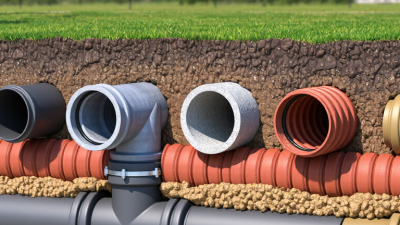
For buyers studying the top sewer pipe manufacturers in China, pipe type matters more than catalog appearance. Sewer systems usually carry wastewater by gravity, so internal smoothness, joint quality, and slope control are essential. PVC-U pipes are light, corrosion-resistant, and practical for residential drainage and smaller municipal branches. Their smooth walls reduce deposits, but poor bedding can cause deformation.

HDPE pipes suit areas with ground movement, coastal moisture, or aggressive soil. Their flexible bodies and welded joints help reduce leakage risks. They are often selected for buried drainage, industrial wastewater, and rehabilitation projects. However, installers need proper fusion equipment and trained operators. A weak joint can defeat an otherwise strong pipe. This detail is easy to overlook.

Reinforced concrete pipes remain useful beneath roads, deep trenches, and locations with heavy external loads. Their strength is valuable, though lifting requires larger equipment and damaged joints may allow infiltration. Corrugated plastic pipes can reduce handling time, but buyers should check ring stiffness and long-term settlement data. In China, site conditions vary sharply between cities, from soft coastal soil to cold northern ground. No material wins everywhere. Buyers should compare hydraulic capacity, wall thickness, chemical resistance, joint design, and local code requirements. Requesting factory test reports, dimensional records, and third-party inspection can reveal gaps that photographs never show. Specification reviews still need human judgment; I would not treat a low price as technical evidence.
How to Evaluate Chinese Sewer Pipe Manufacturers

Top 10 Sewer Pipe Manufacturers in China for Buyers

How to Evaluate Chinese Sewer Pipe Manufacturers

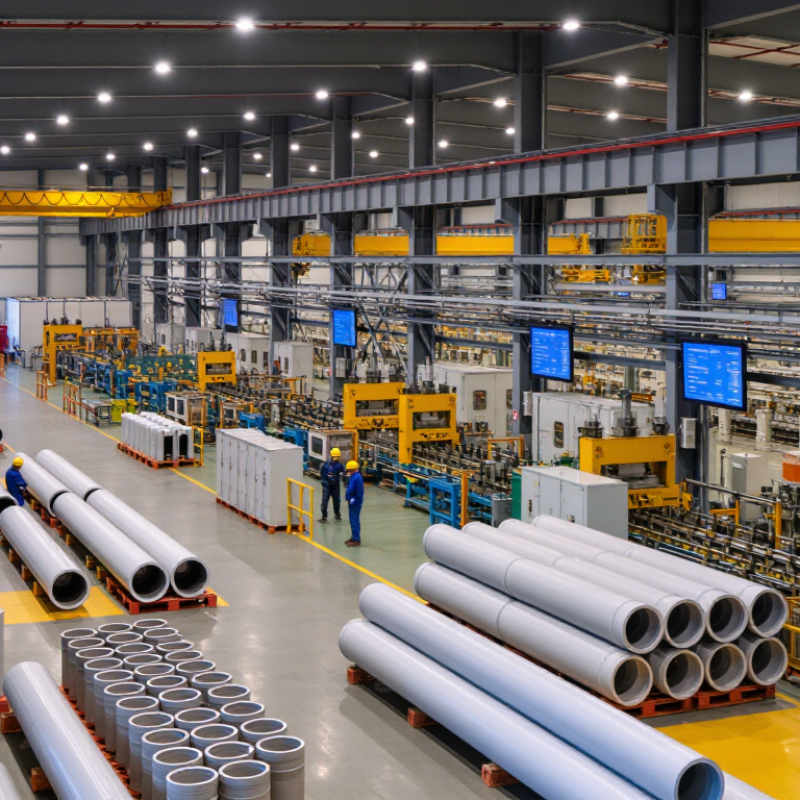
A serious evaluation starts with the factory, not the catalog. Visit the production site when possible, or request a live video inspection. Check extrusion lines, storage areas, laboratory equipment, and finished-pipe handling. Clean, organized production zones often reveal stronger process control. Often, they do.

Ask for evidence of material testing, pressure performance, ring stiffness, impact resistance, and dimensional accuracy. The manufacturer should explain its testing frequency and provide recent, traceable reports. Confirm whether tests come from an independent laboratory or an internal quality team. Internal testing is useful, but independent verification adds confidence.

Review the company’s experience with municipal drainage, industrial discharge, and buried pipeline projects. Request project references with pipe sizes, installation conditions, and service periods. A reliable supplier should discuss soil loads, joint design, temperature changes, and transport risks. Do not judge quality from price alone. A low quotation may exclude testing, protective packaging, or technical support.

Check raw material certificates, batch numbers, production records, and inspection procedures. Ask how defects are isolated and how complaints are handled. Response time matters during installation. Sample pipes should match mass-production specifications, including wall thickness and socket dimensions. They sometimes do not.

Use a written purchase specification. Include standards, tolerances, markings, packaging, inspection rights, and replacement terms. Clarify delivery capacity during peak seasons. A manufacturer may promise fast output, yet lack enough molds or trained inspectors. That gap deserves careful questioning.

Top 10 Sewer Pipe Manufacturers in China for Buyers - How to Evaluate Chinese Sewer Pipe Manufacturers

Use the criteria below to compare prospective manufacturers. The table is a buyer-evaluation framework, not a verified ranking of specific companies. Requirements vary by pipe material, project specification, and destination market.

No. Evaluation Dimension What to Check Evidence to Request Buyer’s Practical Check
1 Product and material fit Confirm the pipe material and construction suit the project, such as concrete, PVC-U, or polyethylene pipes, and the specified sewer application. Product catalogue, technical data sheets, material declarations, and applicable product-standard references. Match material, diameter, stiffness or pressure class, joint type, and project specification line by line.
2 Applicable standards Check that the offered product is made and tested to the standards required by the project and destination market. Standards differ by material and pipe type. A list of claimed standards, current test reports, and the exact product models covered by each report. Verify the standard number, edition, scope, and test sample details with the project specifier or relevant standards body.
3 Quality management and traceability Assess whether production controls and records allow supplied pipes to be traced to production batches and inspection results. Quality-management certificates, sample batch records, inspection plans, and product marking examples. Check certificate validity and scope; ask how nonconforming products are identified and handled.
4 Testing and inspection capability Confirm that relevant dimensional, material, joint, and performance checks are carried out for the product being quoted. Test procedures, recent product-specific reports, equipment calibration records, and third-party laboratory reports where required. Ensure reports identify the tested product and methods; do not rely on certificates that do not cover the offered item.
5 Dimensions and tolerances Compare nominal diameter, length, wall or profile dimensions, socket details, and permitted tolerances with the design requirements. Dimension tables, approved drawings, tolerance specifications, and inspection records for representative production. Confirm whether quoted dimensions refer to internal diameter, external diameter, or another defined measurement.
6 Jointing and system compatibility Check joint type, gasket compatibility, connection method, and compatibility with manholes, fittings, and pipes from other approved sources. Joint drawings, gasket material details, installation instructions, and compatibility statements for specified components. Request samples or a mock-up where interfaces are critical; confirm the joint system meets the project’s leakage requirements.
7 Production capacity and lead time Evaluate whether the manufacturer can produce the required product range and quantities within the project schedule. Production schedule, stated capacity by product type, current order commitments, and shipment plan. Ask for a dated delivery schedule and clarify how production slots, inspection, and transport affect lead time.
8 Export and packaging readiness Determine whether the supplier can prepare the required export documents and protect pipes and fittings during handling and transport. Packing plan, loading photos or procedures, sample shipping documents, and confirmation of export experience for the destination market. Agree packaging, container loading, marking, Incoterms, and responsibility for transit damage before placing the order.
9 Technical support and installation guidance Check that technical support is available for product selection, storage, handling, installation, and troubleshooting. Installation manuals, handling guidance, named technical contact, and written response process for site questions. Ask how quickly technical queries are answered and whether support is available in the project’s working language.
10 Commercial terms and after-sales response Compare total delivered cost, payment terms, warranty conditions, spare-part or replacement arrangements, and claims handling. Itemized quotation, sales contract, warranty terms, inspection and acceptance procedure, and written claims process. Clarify exclusions, inspection points, remedies for nonconformity, and which party pays related freight or replacement costs.

Profiles of 10 Sewer Pipe Manufacturers in China

China’s sewer pipe sector includes manufacturers with different materials, equipment, and project strengths. A useful profile must examine more than catalog prices.

One coastal producer specializes in PVC-U drainage pipes for residential projects. Its strength is stable extrusion and smooth inner walls. A northern manufacturer focuses on HDPE pipes for municipal networks. It offers strong joint flexibility in cold weather. A third factory produces large-diameter spiral-wound pipes for stormwater systems. Buyers should inspect winding accuracy and internal reinforcement.

A fourth manufacturer supplies polypropylene pipes for chemical-resistant drainage applications. Its testing records deserve close review. A fifth company makes reinforced concrete sewer sections for heavy urban traffic. Delivery weight and site-handling plans matter here. A sixth producer combines extrusion with automated dimensional inspection. This can reduce ovality and wall-thickness variation.

A seventh supplier concentrates on custom fittings, including bends, tees, and inspection chambers. Fit consistency is essential. An eighth manufacturer uses recycled materials in selected non-pressure products. Buyers should verify traceability and permitted material ratios. A ninth factory serves export projects with multilingual technical documents and container-loading experience. Documentation can prevent costly misunderstandings. A tenth producer offers integrated pipe, gasket, and installation support. Its service may suit contractors with limited field resources.

Reliable evaluation should include factory visits, sample tests, pressure or stiffness data, and independent inspection. Check production dates, storage conditions, and batch coding. A polished website proves little. Some factories still rely on manual records, which creates avoidable risks. That weakness deserves honest discussion. Regional logistics, warranty terms, and replacement procedures should also enter the buying decision.

Comparing Product Quality, Certifications, and Production Capacity

Top 10 Sewer Pipe Manufacturers in China for Buyers

For this Top 10 comparison, product quality should lead the scorecard. Recent industry statistics from the China Plastics Pipe Association place China’s plastic pipe output at roughly 15–16 million tonnes annually. Capacity is impressive, but scale alone proves little. Buyers should request resin traceability, wall-thickness records, impact results, and hydrostatic pressure data. A pipe may look smooth while hiding weak fusion or uneven layers.

Certifications need closer inspection. ISO 9001 shows a quality management system, not automatic product reliability. For buried plastic sewer pipes, buyers commonly check compliance with ISO 4427, EN 1401, or applicable Chinese GB/T standards. Independent laboratory reports should match the exact pipe material, diameter, pressure class, and production site. Certification dates matter. A certificate from another factory is a warning sign.

Production capacity should be measured beyond advertised annual output. Ask about extrusion-line numbers, maximum diameter, mold availability, daily shift records, and emergency replacement capacity. Recent factory audits often reveal differences between installed capacity and usable capacity. This matters during municipal projects, where delayed delivery can stop trench crews and backfill operations. Factory inspections should include pellet storage, calibration tanks, automatic thickness gauges, and sample retention areas. Some scorecards still overvalue polished certificates. That is an imperfect method worth reconsidering.

Top 10 Sewer Pipe Manufacturers in China for Buyers

Standards-based buyer evaluation framework covering product quality, certifications, and production capacity

The chart uses a 100-point buyer weighting model rather than company-level scores. Product quality is assessed through compliance with applicable Chinese product standards, dimensional accuracy, strength and leakage testing, and traceability. Certification review includes ISO 9001, ISO 14001, ISO 45001, and valid third-party test reports. Production capacity should be verified through audited monthly output, available production lines, curing or storage capacity, quality-control facilities, and delivery records.

Key Considerations for Sourcing and Importing Sewer Pipes

Top 10 Sewer Pipe Manufacturers in China for Buyers

When comparing the top 10 sewer pipe manufacturers in China, buyers should begin with project requirements. Confirm the pipe material, diameter, wall thickness, pressure class, and connection method. Concrete specifications prevent costly misunderstandings. Ask for technical drawings, material certificates, and recent test reports. Standards must match the destination market, not only the factory’s domestic practice.

A reliable supplier should explain production controls clearly. Review raw material sources, extrusion records, dimensional checks, and hydrostatic testing procedures. Request samples before placing a large order. Inspect socket depth and gasket fit by hand. Small defects matter. A polished catalog can still hide uneven walls or weak packaging. An independent factory audit may reveal more than online reviews. However, audits have limits and should not replace shipment inspections.

Import planning also requires careful attention. Confirm the Harmonized System code, required certificates, labeling rules, and customs documents with a qualified broker. Agree on Incoterms, loading photographs, insurance responsibility, and damage claims in writing. Measure container capacity before finalizing the order. Pipes can consume space quickly, especially with protective supports. Payment terms should connect to measurable milestones, such as approved samples and passed inspections. Delivery estimates are often optimistic. Build buffer time for production delays, port congestion, and document corrections. Ask difficult questions early, even when they slow the discussion.