Made in America
Get Connected With



Choosing the right plumbing couplings begins with the pipe, not the product label. Material, diameter, pressure, temperature, and installation conditions must work together.
The U.S. Environmental Protection Agency reports that household leaks can waste nearly one trillion gallons of water annually. A poorly selected coupling can contribute to that waste through slow, unnoticed seepage. The EPA’s WaterSense guidance therefore supports careful inspection, correct sizing, and durable repair practices. These principles matter in homes, commercial buildings, irrigation systems, and industrial facilities.
Look closely.
The International Code Council’s International Plumbing Code emphasizes approved materials, compatible connections, access for maintenance, and protection against leakage. ASTM standards also define performance requirements for several coupling types, including mechanical, solvent-welded, and plastic piping connections. These references provide a stronger basis than price comparisons alone. However, standards do not remove every decision. A stainless-steel coupling may resist corrosion, while a polymer option may simplify installation and reduce weight. Neither choice is automatically better.
Field experience exposes the difficult details. A coupling installed inside a damp wall needs dependable sealing and future service access. A repair exposed to vibration may require stronger mechanical restraint. A fitting used with incompatible pipe materials can fail quietly before water appears. That risk is easy to underestimate.
This guide explains how to compare plumbing couplings by application, material, connection method, pressure rating, and long-term maintenance needs. It also considers common mistakes, because real projects rarely match catalog illustrations perfectly. The best selection is not always the cheapest or most advanced. It is the one that fits the system’s actual demands, verified against manufacturer data and applicable plumbing requirements.
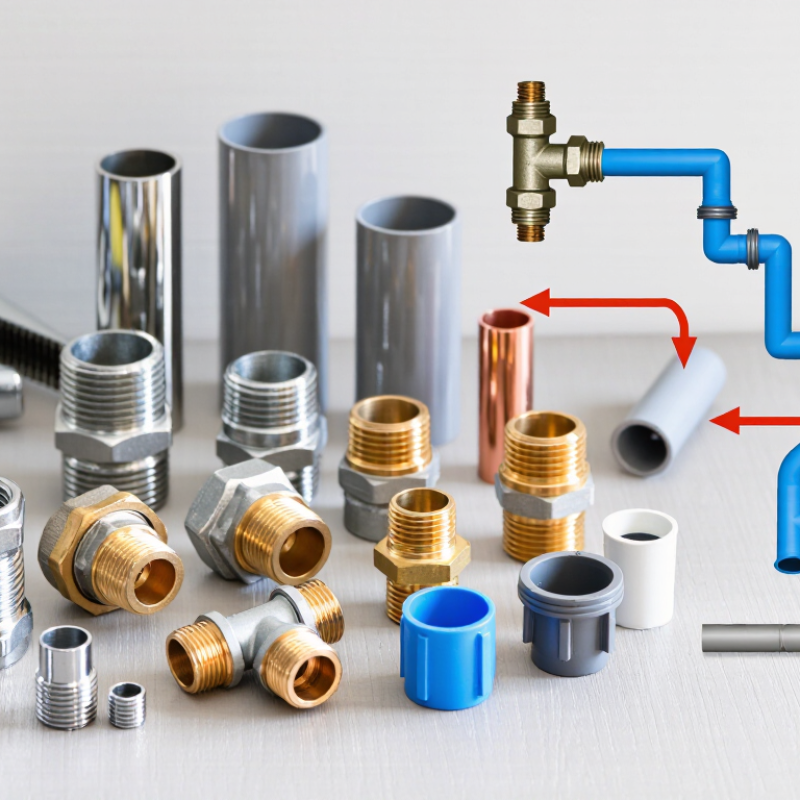
Plumbing couplings connect two pipe sections and restore continuity in a water, drainage, or heating system. Their role sounds simple, but the fitting must match the pipe material, outside diameter, pressure rating, and service temperature. A coupling for rigid plastic is not automatically suitable for copper or steel. Check the manufacturer’s technical data and local plumbing requirements before installation.
On site, I measure twice and dry-fit the parts first. A clean, square pipe end should enter to the marked depth without forcing. Remove burrs, wipe away grit, and keep sealing surfaces dry when the joining method requires it. For threaded couplings, alignment matters more than excessive tightening. Over-tightening can damage threads or split a fitting. That mistake is easy to make.
Couplings have clear limits. They are not valves, filters, or universal solutions for poor alignment. Standard models should not absorb movement, vibration, or major pipe expansion unless specifically designed for those loads. A repair coupling may join a cut section, but it might not include an internal stop. A transition coupling can connect different materials, yet it still needs compatible seals and correct restraint. I once treated a small offset as harmless; the joint later carried unnecessary stress. The better choice would have been to support and realign the pipe first. Pressure testing after assembly can reveal slow leaks that a quick visual check misses.
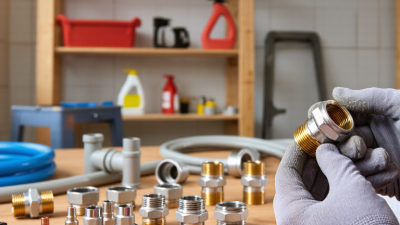
Choosing a plumbing coupling starts with the pipe, not the fitting shelf. Copper pipe usually pairs with copper, brass, or approved transition couplings. PEX needs fittings designed for its expansion, crimp, clamp, or press connection method. PVC and CPVC require chemically compatible fittings and cement systems. Mixing materials casually can create leaks, stress, or galvanic corrosion.
Water conditions matter just as much. Test pH, hardness, chloride levels, temperature, and pressure before selecting materials. Stainless steel often suits aggressive or treated water better than ordinary steel. Dielectric couplings can reduce corrosion between copper and galvanized steel, but they are not a cure for poor grounding or contaminated water. For drinking-water systems, verify that the coupling meets NSF/ANSI/CAN 61 requirements for material safety.
The scale of this decision is significant. The U.S. Environmental Protection Agency’s 2023 Drinking Water Infrastructure Needs Survey estimated $625 billion in investment needs over twenty years. Small connection failures can add to that burden. AWWA guidance also stresses pressure, temperature, and service conditions when evaluating metallic pipe components. I have found that installers often check diameter first and chemistry later. That habit is risky. Measure twice. Document the water test. A coupling rated for 200 psi may still fail when heat, vibration, or incompatible metals are involved. Manufacturer instructions remain essential, because local water chemistry can defeat a seemingly perfect material match.
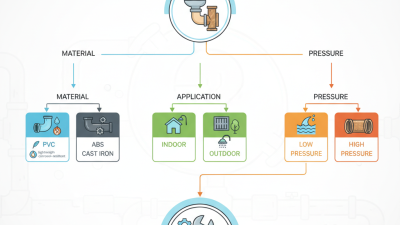
Choose the correct coupling size before comparing designs or connection methods. Measure the pipe’s actual outside diameter, not only its nominal size. A coupling can look right and still leak. Check pressure, temperature, fluid type, and pipe material on the project drawings. ASME B16.3 and relevant ASTM standards provide useful dimensional and performance references.
EPA WaterSense estimates that household leaks can waste more than 9,400 gallons annually, so small fitting errors deserve serious attention.
Design choice depends on movement, access, and maintenance conditions. Use flexible couplings where vibration, thermal expansion, or slight pipe misalignment may occur. Rigid couplings suit stable, accurately supported runs.
For metal pipes, threaded, soldered, brazed, or press connections may be appropriate. Plastic systems often require solvent cement, compression, or approved push-fit methods. Always confirm that the coupling and seal material match the pipe and transported fluid.
I still measure twice, especially in cramped service spaces. That habit prevents expensive rework.
Connection method also affects installation risk and inspection time. Press and mechanical systems can reduce open-flame exposure, while threaded joints need careful alignment and sealing. Follow the manufacturer’s instructions and the applicable plumbing code; do not improvise sealants.
The 2024 ASPE Plumbing Engineering Design Handbook emphasizes compatibility, support, and serviceability during system design.
In practice, I sometimes focus too heavily on nominal size. That is a mistake. The best coupling is the one that fits the measured pipe, expected movement, working conditions, and future repair plan.
Choosing a plumbing coupling starts with pressure, not appearance. Check the coupling’s pressure rating at the system’s actual temperature. A fitting rated for 150 psi at 73°F may carry less pressure in hot water service. Read the manufacturer’s technical sheet, then compare it with the pump’s maximum pressure, surge conditions, and pipe material. Leave a safety margin. Small errors become expensive leaks.
Codes matter just as much. The 2024 International Plumbing Code and local amendments may control approved materials, joining methods, access, and testing. For potable water, verify compliance with NSF/ANSI 61 or the applicable local standard. The U.S. Environmental Protection Agency’s 2023 Drinking Water Infrastructure Needs Survey estimates $625 billion is needed over 20 years, showing why durable, code-compliant repairs matter. A coupling should also match pipe diameter, wall thickness, and thermal movement.
Installation details decide whether the rating survives real service. Clean pipe ends, remove burrs, and keep seal surfaces dry when required. Use the specified insertion depth and torque; overtightening can damage threads or seals. Pressure-test the completed section under the governing code, then inspect every joint after stabilization. I have seen rushed installations pass an initial check and drip hours later. That is easy to overlook. Recheck supports, alignment, and vibration before closing walls or trenches. When records are available, document the coupling type, rating, lot information, and test result for future maintenance.
| Coupling Type | Compatible Pipe Materials | Typical Applications | Pressure and Temperature Checks | Joining Method | Relevant Code or Standard Considerations | Key Installation Requirements |
|---|---|---|---|---|---|---|
| Copper Sweat Coupling | Type K, L, or M copper tube; some compatible copper-alloy systems | Potable water, hydronic heating, compressed air, and general indoor piping | Select a fitting rated for the system pressure and operating temperature. Copper tube pressure capacity changes with tube type, diameter, wall thickness, and temperature. | Capillary soldering; brazing may be required for higher-temperature or specialized systems | ASTM B16 and ASME B16.22 are commonly referenced for wrought copper and copper-alloy solder-joint fittings. Local plumbing and fuel-gas codes may impose additional requirements. | Cut squarely, deburr, clean, apply approved flux, heat evenly, and inspect the complete soldered joint. Use lead-free solder for potable-water systems where required. |
| Threaded Pipe Coupling | Steel, galvanized steel, brass, and malleable iron pipe with compatible tapered threads | Exposed water lines, compressed air, fire-protection piping, and low-pressure process services | Confirm the coupling’s pressure class, fluid compatibility, and temperature rating. Threaded ratings can be reduced by heat, corrosion, and cyclic loading. | Tapered threaded connection using approved pipe sealant or tape compatible with the fluid | ASME B1.20.1 covers many general-purpose pipe threads; ASME B16.3 covers malleable-iron threaded fittings. Fire-protection installations must meet the applicable fire code and listing requirements. | Keep sealant away from the first thread, avoid cross-threading, and do not over-tighten. Support piping to prevent mechanical stress on the coupling. |
| PVC Solvent-Weld Coupling | PVC pressure pipe and tubing of the same material and schedule | Cold-water distribution, irrigation, drainage where permitted, and selected chemical-service applications | Use the pressure rating assigned to the exact pipe size, schedule, and temperature. PVC pressure ratings generally decrease as temperature rises; PVC is not suitable for hot-water service unless specifically approved. | Primer and solvent cement designed for the pipe and fitting material | ASTM D2466 is commonly used for Schedule 40 PVC socket fittings; ASTM D2467 applies to Schedule 80 PVC socket fittings. Potable-water products may require applicable health-effect certification. | Make clean, square cuts; remove burrs; use the correct primer and cement; fully insert with a slight twist; and observe the manufacturer’s cure time before pressure testing. |
| CPVC Solvent-Weld Coupling | CPVC hot- and cold-water pipe systems | Residential and commercial hot-water distribution, cold-water plumbing, and selected industrial services | Check the listed pressure rating at the actual operating temperature. Many CPVC systems are designed for hot-water service, but allowable pressure decreases at elevated temperatures. | CPVC-compatible primer and solvent cement | ASTM F438 covers Schedule 40 CPVC socket fittings, while ASTM F437 covers Schedule 80 CPVC fittings. Verify applicable potable-water and local plumbing-code approvals. | Use only CPVC-compatible joining products, allow adequate curing time, provide expansion allowance, and protect piping from excessive heat and ultraviolet exposure. |
| PEX Crimp or Clamp Coupling | PEX tubing of the matching dimensional standard and fitting system | Potable-water distribution, radiant heating, and hydronic piping | A common PEX design basis is 100 psi at 180°F, but the exact tubing and fitting listing controls. Confirm pressure, temperature, chlorine, and UV limitations before selection. | Copper crimp ring, stainless-steel clamp, or another approved mechanical connection method | ASTM F1807 covers metal insert fittings for PEX tubing, and ASTM F1960 covers expansion-type fittings. Applicable plumbing codes may require listed fittings and specific connection methods. | Use the correct tool and gauge, make a square cut, insert the fitting to the marked depth, and inspect the completed connection. Do not mix incompatible fitting systems or tubing dimensions. |
| Push-to-Connect Coupling | Only the copper, CPVC, or PEX materials specifically listed for the fitting | Repairs, alterations, confined spaces, and fast connections in approved water or heating systems | Use the coupling only within its marked pressure and temperature range. Ratings differ by pipe material, fitting size, and service fluid. | Mechanical grab ring and internal sealing element; no soldering or solvent cement | Confirm code acceptance, potable-water certification where applicable, and whether concealed installation is permitted in the project jurisdiction. | Cut the pipe square, remove burrs and sharp edges, mark insertion depth, push fully home, and provide adequate pipe support. Keep the seal area clean and undamaged. |
| Flanged Coupling | Steel, ductile iron, copper-alloy, PVC, CPVC, and other systems with compatible flanges | Pump connections, valves, equipment interfaces, large-diameter piping, and systems requiring regular disassembly | Select matching flange pressure classes and gasket materials. The assembly rating is limited by the lowest-rated component, bolt arrangement, temperature, and gasket. | Bolted connection with a correctly sized and chemically compatible gasket | ASME B16.5 covers many pipe flanges and flanged fittings; ASME B16.47 covers certain large-diameter flanges. Other piping codes may govern material, testing, and bolt requirements. | Align without forcing the pipe, center the gasket, lubricate bolts when permitted, tighten in a cross pattern, and use the specified torque sequence. |
| Shielded Flexible Coupling | Compatible cast iron, PVC, ABS, copper, steel, and other pipe materials listed for the coupling | Drain, waste, and vent repairs; transitions between different pipe materials; limited underground or above-ground applications | Many flexible couplings are intended for non-pressure drainage service rather than pressurized water. Verify pressure, vacuum, temperature, burial, and shear-load limitations. | Elastomeric sleeve secured by stainless-steel clamps and, where required, a rigid shield | ASTM C1173 covers flexible transition couplings for underground drainage and sewer piping. Plumbing and sewer codes determine where shielded or unshielded couplings may be used. | Match pipe outside diameters, clean and square the ends, center the sleeve, tighten clamps evenly, and provide required support against movement or pipe separation. |
Choosing a plumbing coupling is a lifecycle decision, not merely a purchase-price decision. The right option must match pipe material, pressure, temperature, movement, and water chemistry. In field conditions, durable couplings resist corrosion, gasket aging, and vibration. Stainless components may cost more upfront, but they can reduce leak checks and emergency repairs. A cheaper fitting can look sensible. It may become expensive behind a finished wall.
The U.S. Environmental Protection Agency’s 7th Drinking Water Infrastructure Needs Survey and Assessment estimates that drinking-water systems need $625 billion over 20 years. The ASCE 2021 Infrastructure Report Card gave drinking water a C-minus grade. These figures do not price one coupling, but they highlight the cost of deferred reliability. Compare expected service life, inspection frequency, replacement access, and labor hours. Select seals rated for the actual fluid and temperature, not a generic “standard” label. Confirm pressure ratings after considering surges, not only normal flow.
Maintenance planning should remain practical. Leave wrench clearance, label concealed joints, and photograph installations before closing walls. A coupling requiring retightening may erase its low purchase cost. However, durability is not automatically better. Over-specifying materials can waste money when loads and water chemistry are mild. The weak point is often the assumption. Local code review and independent engineering advice can prevent expensive surprises.
Typical durability, maintenance, and installed-cost planning ranges for common coupling options
Stainless-steel press-fit and ductile-iron grooved couplings generally provide strong long-term durability, while PVC solvent-weld systems usually offer the lowest installed cost. Maintenance figures represent estimated service interventions per 100 metres over ten years, and costs are indicative installed ranges in USD per metre. Actual results depend on water chemistry, pressure, installation quality, access, and local labor rates.