Made in America

Get Connected With

JointsCouplings.com White Logo

Opening Hours M-F: 07:00 AM to 4:00 PM (PST)

China Top Pipe Manufacturing Suppliers for Global Buyers

China remains a major force in global pipe manufacturing, supported by its extensive steel, machinery, and logistics industries. The World Steel Association reported approximately 1,005 million tonnes of crude steel production in China during 2024. That figure represented more than half of global output. Steel volume matters, but it does not automatically identify the best pipe supplier.

This guide examines leading Chinese manufacturers across seamless, ERW, spiral-welded, stainless steel, and coated pipe categories. It considers production capacity, export experience, material control, testing systems, and documentation quality. UN Comtrade data under HS codes 7304, 7305, and 7306 can help buyers review international trade patterns. However, customs codes do not fully reveal factory reliability or after-sales performance.

A credible supplier should provide heat numbers, mill test certificates, dimensional records, and traceable inspection results. Relevant standards may include ISO 9001, ASTM specifications, API 5L, or project-specific requirements. Buyers should also verify coating thickness, hydrostatic testing, weld inspection, and packing conditions before shipment. Small details matter. A damaged pipe end can delay an entire installation.

No ranking is perfect. Supplier capability may change with equipment upgrades, raw-material access, or export-market pressure. Some manufacturers present impressive catalogs but offer limited evidence from comparable projects. That weakness deserves attention. This overview therefore focuses on verifiable business information rather than promotional claims, helping global buyers compare China’s top pipe manufacturing suppliers with greater confidence and practical caution.

China Top Pipe Manufacturing Suppliers for Global Buyers

Types of Pipes Produced by China’s Leading Manufacturers

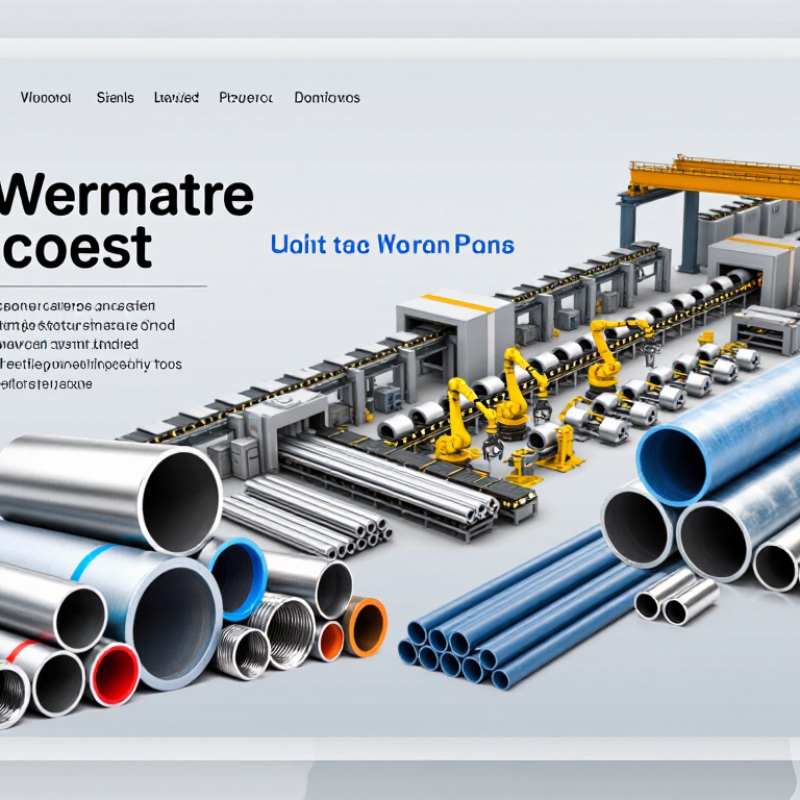
China’s leading pipe manufacturers produce a broad mix for construction, energy, water, and machinery. Seamless pipes are formed from solid billets and suit high-pressure boilers, heat exchangers, and hydraulic systems. Welded pipes use steel strip or plate, making them practical for structural frames, water transmission, and general industrial lines. Common welded formats include ERW, longitudinal submerged arc welded, and spiral submerged arc welded pipes.

Material selection changes performance. Carbon steel pipes offer strength and cost efficiency, while stainless steel pipes resist corrosion in food, chemical, and coastal environments. Galvanized pipes add a zinc layer for outdoor service. Ductile iron pipes remain important for municipal water networks because their thick walls handle external loads. The World Steel Association reported that China produced about 1,019 million tonnes of crude steel in 2023, representing roughly 54% of global output. This scale supports varied pipe production, but volume alone does not prove consistent quality.

Global buyers should check dimensions, heat numbers, coating thickness, hydrostatic results, and independent inspection records. API 5L, ASTM, EN, and ISO requirements may apply, depending on the project. The International Energy Agency’s World Energy Outlook continues to identify expanding electricity and infrastructure needs, supporting demand for transmission and utility piping. Still, specifications can be misunderstood. A cheaper spiral pipe may be unsuitable for cyclic pressure. A polished surface may hide weak traceability. Careful document review matters as much as factory capacity.

China Top Pipe Manufacturing Suppliers for Global Buyers

Representative maximum outside diameters commonly offered for major pipe categories produced in China.

The size ranges reflect commonly available international product configurations and standards, including ASTM, API, EN and ISO specifications. Actual dimensions vary by manufacturer, grade, production process and project requirements.

Key Regions and Industrial Clusters in China’s Pipe Industry

China’s pipe industry is organized around strong regional and industrial clusters.

Hebei is widely known for welded steel pipe, spiral pipe, and large-volume infrastructure orders. Jiangsu has deeper capacity in seamless, alloy, and stainless steel production. Zhejiang supports stainless pipe, fittings, and precision components, often serving chemical and equipment manufacturers. Shandong combines steel resources, large-diameter pipe production, and energy-sector supply chains. Guangdong adds flexible manufacturing for stainless, decorative, and specialized industrial applications.

Location changes the equation.

A buyer near Hebei may gain lower inland transport costs for heavy welded pipe. Jiangsu suppliers can be practical for seamless pipe requiring controlled dimensions and heat treatment. In coastal regions, export experience may simplify container loading, documentation, and port coordination. These advantages still require verification.

During a factory visit, check coil storage, forming lines, welding records, hydrostatic testing, and ultrasonic inspection. Ask whether heat numbers remain traceable from raw material to final bundle.

Cluster reputation is not a guarantee.

Some quotations look attractive because coating thickness, inspection scope, or packing quality is unclear. I have seen buyers compare only price and miss differences in wall tolerance and test frequency. That approach can create expensive delays.

Request recent mill certificates, production photos, independent inspection options, and clear acceptance standards.

The best supplier is not always the largest one. A smaller factory with disciplined records may provide more dependable communication and batch control. Mistakes happen, especially when specifications are translated loosely.

Keep dimensions, standards, tolerances, coating systems, and delivery terms written in one controlled document.

Quality Standards and Certifications for International Buyers

International pipe buyers should evaluate standards before comparing prices. A reliable supplier can provide ISO 9001 quality management certification and product documents matching the order. Depending on the application, buyers may also require ASTM, ASME, EN, or other recognized specifications. These standards define dimensions, chemical composition, mechanical strength, and testing methods. Certification alone is not enough. Check the certificate scope, issuing body, validity, and covered production site.

Tips: Request a recent mill test certificate for every heat number. Confirm wall thickness, grade, pressure rating, and inspection results. Ask whether hydrostatic testing, ultrasonic testing, or radiographic testing applies. Keep the purchase specification clear and measurable. Small wording gaps can create expensive disputes later.

Traceability shows how seriously a manufacturer controls quality. Each pipe should connect to records for raw material, heat treatment, inspection, and final release. Third-party inspection may add confidence for large projects, especially when shipment approval affects construction schedules. Still, inspection cannot repair poor specifications. Buyers should review drawings, tolerances, coating requirements, and packing details before production begins. In practice, many problems start with assumptions, not defective steel. A thoughtful supplier will discuss uncertainty instead of promising everything. That behavior is not flashy, but it often reveals professional judgment.

How to Evaluate and Select a Chinese Pipe Supplier

China Top Pipe Manufacturing Suppliers for Global Buyers

Selecting a Chinese pipe supplier requires evidence, not attractive catalogs. China produced 1.005 billion tonnes of crude steel in 2024, according to World Steel Association data. This scale offers strong production capacity, but capacity alone does not prove consistency. Ask for recent mill test certificates, heat numbers, chemical composition, tensile results, and dimensional records. Verify that documents match the actual batch. A supplier should also explain its standards, such as ASTM, EN, or API requirements, when relevant to your project.

Factory audits reveal practical details. Check welding areas, storage conditions, calibration labels, and coating inspection points. Request sample photographs with dates and production references. Independent inspection before shipment can confirm thickness, ovality, surface quality, and hydrostatic testing. The International Organization for Standardization states that ISO 9001 supports controlled quality management, but certification is not a substitute for product inspection. I would not trust a perfect presentation alone. Real procurement is less tidy than a brochure.

Tips: Compare at least three suppliers using the same specification sheet. Confirm production lead time, minimum order quantity, packaging, and complaint procedures in writing. Review three recent export references, where possible. A small documentation gap is not automatic failure, but it needs a written correction. Also check whether the supplier can maintain traceability after cutting, coating, or bundling.

Export Processes, Pricing Factors, and Buyer Considerations

Exporting industrial pipe requires more than comparing a quoted price. The World Steel Association reported global crude steel production of about 1.89 billion tonnes in 2023, but feedstock availability varies by region. Buyers should request mill certificates, heat numbers, dimensional records, and hydrostatic test results. Small documentation gaps can delay customs clearance.

The export process usually begins with technical specifications, a proforma invoice, and a confirmed production schedule. Before shipment, suppliers prepare packing lists, commercial invoices, certificates of origin, and bills of lading. Independent inspection can verify wall thickness, coating condition, weld quality, and marking accuracy. Under HS codes 7304, 7305, and 7306, UN Comtrade data shows substantial international pipe trade, yet reported values differ by product type and destination. Check the exact classification.

Price is not only steel cost. Energy, forming method, diameter, wall thickness, coating, testing, inland transport, freight, insurance, tariffs, and payment terms all affect the landed price. Request a cost breakdown. It exposes surprises.

Buyer evaluation should include production capacity, batch traceability, quality-system records, and experience with the destination market. Standards such as ASTM, API, or ISO may require different tests and tolerances. A low offer can become expensive when retesting or replacement is needed. I would also confirm packaging for long-distance handling, especially where pipes face rain, salt air, or repeated crane lifting. Reported lead times are often optimistic. Build contingency into the purchase plan.

China Top Pipe Manufacturing Suppliers for Global Buyers - Export Processes, Pricing Factors, and Buyer Considerations

Category Data Dimension Typical Industry Reference Export and Commercial Information Buyer Considerations
Product Portfolio Common Pipe Types Seamless ERW LSAW SSAW Stainless Steel Product selection depends on the required diameter, wall thickness, pressure rating, material grade, and end-use application. Confirm whether the supplier manufactures the required product or sources it from another facility. Request mill certificates and production-capability details.
Product Portfolio Typical Applications Oil and gas transmission, water supply, structural construction, boilers, heat exchangers, fire-protection systems, and mechanical engineering. Different applications require different specifications, testing levels, coatings, and documentation. Provide the operating medium, design pressure, operating temperature, corrosion environment, and installation conditions before requesting a quotation.
Technical Standards Frequently Requested Standards ASTM A53 for general-purpose steel pipe; ASTM A106 for high-temperature seamless carbon steel pipe; API 5L and ISO 3183 for line pipe; EN 10219 for cold-formed structural hollow sections. Standard applicability varies by product type and intended use. A standard designation alone does not define every required inspection or coating condition. Specify the edition of the standard, grade, manufacturing process, dimensions, tolerances, testing requirements, and acceptance criteria.
Material Grades Common Carbon Steel Grades Examples include ASTM A106 Grade B, ASTM A53 Grade B, API 5L Grade B, X42, X52, and X60, subject to the applicable product standard. Chemical composition, yield strength, tensile strength, impact requirements, and weldability can differ significantly between grades. Do not substitute grades without written approval. Check heat-treatment requirements and verify the chemical composition on the material test certificate.
Dimensions Size and Wall Thickness Pipe sizes are commonly specified by nominal pipe size or outside diameter, together with wall thickness or schedule. Large-diameter line pipe may be specified directly by outside diameter and wall thickness. Availability depends on manufacturing route, tooling, steel coil or plate width, and order quantity. State outside diameter, inside diameter where relevant, wall thickness, length tolerance, end finish, and quantity tolerance in the purchase specification.
Manufacturing Production Processes Seamless pipe is produced from a solid billet; ERW pipe is formed and electrically welded; LSAW pipe is longitudinally submerged-arc welded; SSAW pipe is helically submerged-arc welded. Each process has different dimensional, welding, inspection, and size limitations. Select the process according to pressure, diameter, wall thickness, service conditions, and applicable code rather than price alone.
Surface Protection Coating and Finishing Options Black or bare surface, oil coating, hot-dip galvanizing, 3LPE, FBE, epoxy coating, cement lining, and external painting are common options. Coating cost is affected by coating system, thickness, surface preparation, inspection method, and packing requirements. Define the coating standard, dry-film thickness, holiday-testing requirements, repair procedure, color, and allowable coating damage before shipment.
Quality Control Typical Inspection and Testing Dimensional inspection, visual inspection, hydrostatic testing, tensile testing, chemical analysis, hardness testing, and non-destructive testing such as ultrasonic or radiographic examination. Inspection scope may be based on the product standard, project specification, or third-party inspection plan. Agree on inspection hold points, sampling frequency, test method, reporting format, and the responsible inspection party before production starts.
Documentation Common Export Documents Commercial invoice, packing list, bill of lading, certificate of origin, material test certificate, inspection report, insurance document where applicable, and export customs declaration. Additional documents may include fumigation certificates for wooden packing, coating reports, mill qualification documents, and certificates required by the destination country. Confirm document language, legalization or notarization requirements, consignee details, HS code, and document submission deadlines.
Trade Terms Common Incoterms FOB, CFR, CIF, FCA, and DAP are frequently used in international pipe transactions. Under FOB, the buyer generally controls the main ocean freight. Under CIF, the seller arranges freight and basic insurance to the named destination port. Compare quotations on the same Incoterm, destination, insurance scope, currency, and validity period to avoid misleading price comparisons.
Pricing Main Cost Drivers Raw steel price, pipe manufacturing process, grade, outside diameter, wall thickness, order quantity, coating, testing, packing, inland transport, freight, and exchange-rate movements. Seamless production, higher grades, special dimensions, extensive NDT, and protective coatings generally increase the total purchase cost. Request a cost breakdown showing material, processing, coating, inspection, packing, inland freight, ocean freight, and other applicable charges.
Order Quantity Minimum Order and Production Lot Minimum quantities vary by pipe size, grade, production route, tooling, and whether the order is standard or custom. Small orders may have higher unit costs because setup, testing, packing, and logistics expenses are spread over fewer tonnes. Ask for the minimum economic order quantity and verify whether mixed sizes or grades can be combined in one shipment.
Lead Time Production and Shipment Schedule Standard products may require several weeks for production, while custom sizes, special coatings, third-party inspection, and peak-season logistics can extend the schedule. The confirmed lead time should begin after technical approval, payment or letter-of-credit confirmation, and receipt of all required specifications. Obtain a milestone schedule covering order confirmation, raw-material procurement, production, inspection, coating, packing, and vessel booking.
Packaging Protection During Transit Bundling with steel straps, plastic protection, end caps, waterproof wrapping, export pallets, and seaworthy packing are commonly used. Packaging requirements depend on pipe length, coating, destination climate, handling method, and container or break-bulk shipment. Approve packing photographs or a packing specification before dispatch, especially for coated, threaded, polished, or thin-wall pipe.
Supplier Qualification Factory and Quality Evidence Relevant evidence may include a valid quality-management certificate, production-line information, calibration records, previous inspection reports, and traceable material records. Certificates should be checked for scope, validity, issuing body, and consistency with the actual manufacturing site. Distinguish between a manufacturer, trading company, and authorized distributor. Verify the legal entity receiving payment and the facility listed in quality documents.
Payment Common Settlement Methods Telegraphic transfer, documentary letter of credit, and other agreed trade-finance methods may be used depending on the buyer's risk policy and order value. Payment schedules often include an advance payment or documentary payment arrangement, subject to contract terms and credit assessment. Link payment milestones to approved documents, inspection results, and shipment conditions. Confirm beneficiary details through an independent channel.
Risk Management Key Buyer Risks Risks include incorrect grade, dimensional nonconformity, inadequate coating, incomplete documentation, shipment delay, cargo damage, and unauthorized material substitution. Clear specifications, contractual remedies, independent inspection, and traceability controls can reduce these risks. Include requirements for nonconformance handling, replacement or refund, delay responsibility, inspection rights, and governing law in the purchase contract.
Market Selection Supplier Comparison Criteria Compare technical capability, quality consistency, production capacity, export experience, inspection transparency, total landed cost, and after-sales response. The lowest quoted unit price may not provide the lowest total cost after inspection, coating, freight, customs, rework, and delay expenses are included. Use a weighted evaluation sheet and compare at least two or three technically equivalent quotations under identical specifications and Incoterms.