Made in America

Get Connected With

JointsCouplings.com White Logo

Opening Hours M-F: 07:00 AM to 4:00 PM (PST)

Top Storm Water Pipe Manufacturers for Global Buyers

Choosing the right storm water pipe manufacturer affects drainage performance, project safety, and long-term maintenance costs. Global buyers need more than attractive prices or polished catalogues. They must examine production experience, material quality, technical support, and delivery reliability. A pipe may look strong in a warehouse, yet fail under heavy traffic, poor bedding, or repeated flooding.

This guide introduces leading manufacturers serving international infrastructure markets. It considers products such as HDPE, PVC, concrete, and corrugated metal pipes. Each material suits different soil conditions, flow rates, installation methods, and service expectations. Buyers should review wall structure, pressure ratings, joint design, chemical resistance, and available diameters. Independent test reports matter. So do traceable quality records.

Details reveal the difference. Ask how factories control dimensional accuracy during extrusion or molding. Check whether samples are tested for stiffness, leakage, impact resistance, and ultraviolet exposure. Confirm packaging methods before long-distance shipping. Damaged pipe ends can create installation problems before the project even starts. Compliance requirements also vary between countries, so certificates must match the destination market.

No supplier is perfect. A strong shortlist still needs careful verification. Production capacity can change, and published specifications may not explain field performance. Buyers should request references from comparable drainage projects and clarify warranty responsibilities in writing. This review offers a practical starting point, not a substitute for engineering judgment. With transparent evidence and realistic comparisons, procurement teams can select manufacturers that support dependable storm water management across borders.
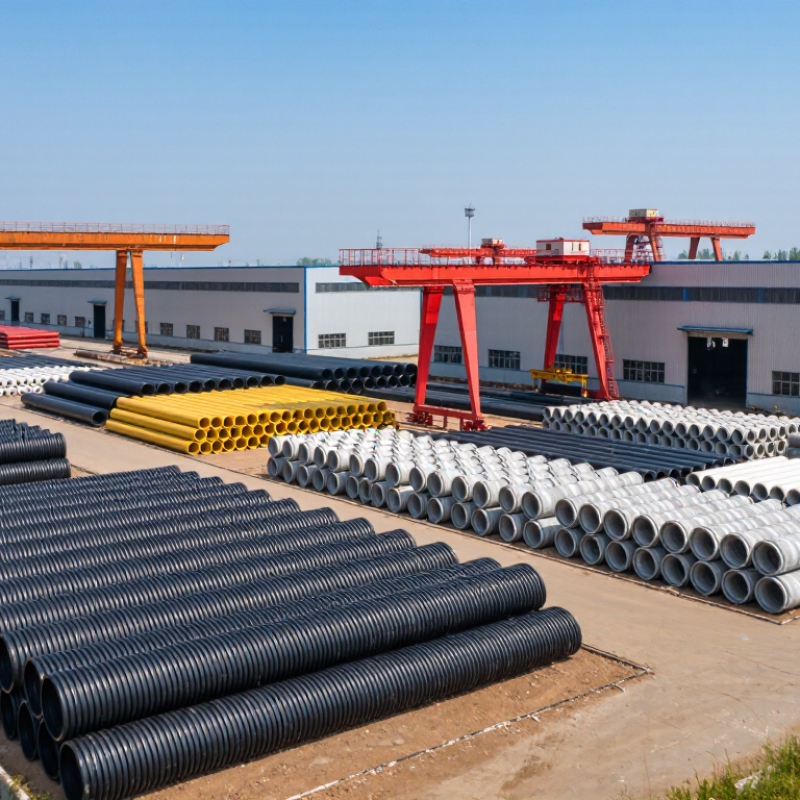
Top Storm Water Pipe Manufacturers for Global Buyers

What Storm Water Pipes Are and How They Support Drainage Systems

Storm water pipes are conduits that collect and move rainwater away from roads, buildings, and developed land. They connect roof drains, catch basins, roadside channels, and underground outlets. Their main purpose is simple: reduce surface flooding and protect foundations, pavements, and soil from uncontrolled runoff.

Effective drainage depends on more than pipe diameter. Engineers assess rainfall intensity, catchment area, slope, flow velocity, and allowable discharge. Larger pipes may carry more water, but they can be unnecessary or poorly matched to the site. Smooth internal walls reduce resistance, while strong outer walls help withstand soil pressure and traffic loads. Material selection also matters. Durability, joint design, chemical exposure, temperature changes, and installation conditions should be reviewed together. Small details matter.

Installation quality often decides long-term performance. A stable trench base, correct bedding, secure connections, and careful backfilling help prevent settlement and leakage. Access points should support inspection and cleaning, especially where leaves, sand, or road debris may enter. Local drainage codes and tested performance requirements should guide procurement.

“Water will find a path.”

That path is not always the intended one. Poor grading, blocked inlets, or undersized outlets can weaken an otherwise sound system. Regular inspections reveal these problems early, although no design remains perfect under every storm. Good drainage planning therefore combines calculations, site evidence, and practical maintenance expectations.

Key Materials, Designs, and Standards Used in Storm Water Pipes

Storm water pipes must match local rainfall, soil, traffic loads, and maintenance capacity. The UN World Urbanization Prospects projects that 68% of people may live in urban areas by 2050. That pressure makes reliable drainage more important. ASCE’s 2021 Infrastructure Report Card rated U.S. stormwater infrastructure C-, showing a clear renewal gap.

Common materials include reinforced concrete, PVC, HDPE, and polypropylene. Concrete offers high stiffness under deep burial and heavy traffic. PVC provides smooth internal walls and strong corrosion resistance. HDPE and polypropylene handle ground movement better, but their joints and bedding need careful installation. Design should consider pipe diameter, slope, hydraulic capacity, cover depth, soil pressure, and access chambers. Engineers often use Manning’s equation, yet real sites are rarely perfect. Sediment changes performance.

Standards help buyers compare products without trusting vague claims. ASTM C76 covers reinforced concrete pipe, while ASTM F2306 and AASHTO M 294 address corrugated polyethylene pipe. EN 13476 covers structured-wall thermoplastic systems. Check third-party test reports for stiffness, impact resistance, joint leakage, and chemical exposure. Tips: Request installation guidance, not only a catalog. Confirm local approval requirements before ordering. A low unit price can become expensive after poor bedding, difficult repairs, or undersized capacity.

Top Storm Water Pipe Manufacturers for Global Buyers

Key Materials, Designs, and Standards Used in Storm Water Pipes

Materials

HDPE and PVC are lightweight thermoplastics with smooth interiors. Reinforced concrete provides high structural mass, while corrugated steel is commonly selected for strength and rapid installation.

Hydraulic Design

The chart compares typical Manning’s roughness coefficients. Lower values generally indicate a smoother flow surface, but actual capacity also depends on diameter, slope, joints, inlets, and installation quality.

Common Standards

Frequently referenced standards include AASHTO M294 and ASTM F2306 for HDPE, ASTM F679 for large-diameter PVC, ASTM C76 for reinforced concrete pipe, and EN 13476 for structured-wall thermoplastic systems.

Typical Manning’s n values shown are engineering reference values; project specifications and local standards should determine final material selection.

How to Assess Storm Water Pipe Manufacturers Worldwide

Top Storm Water Pipe Manufacturers for Global Buyers

How to Assess Storm Water Pipe Manufacturers Worldwide

Choosing a storm water pipe manufacturer requires more than comparing prices. Examine product data, production experience, and quality controls. Ask whether the factory produces pipes for heavy rainfall, road drainage, or underground utility projects. Pipe diameter, wall thickness, stiffness, joint design, and material composition should match the project drawings.

Request recent test reports from independent laboratories. Check resistance to crushing, leakage, ultraviolet exposure, and chemical contact. Confirm that testing follows recognized international or local standards. A reliable supplier should provide batch numbers, inspection records, and traceability documents. Documents are not enough. Review factory photographs, production dates, and sample labels carefully.

Production capacity also matters. Ask about mold availability, lead times, spare tooling, and export packaging. Visit the facility when possible, or arrange a live video inspection. Look for clean storage areas, calibrated equipment, and trained inspection staff. Contact comparable project references, especially in climates similar to yours. A low quotation may exclude testing, fittings, inland transport, or replacement costs. That detail is easy to miss. No assessment is perfect, and even experienced buyers can overvalue polished presentations. Keep a written scoring sheet covering performance, evidence, communication, and after-sales response. A manufacturer that answers technical questions clearly usually creates fewer surprises during installation.

Top Storm Water Pipe Manufacturers for Global Buyers - How to Assess Storm Water Pipe Manufacturers Worldwide

Global buyer assessment matrix based on commonly used materials, standards, applications, and procurement indicators. Figures are typical industry reference ranges and should be verified with each supplier.

Assessment Dimension Typical Global Manufacturer Profile Common Product Data Relevant Standards or Tests Buyer Verification Points
Corrugated HDPE Pipe Large-volume producers serving municipal drainage, highway, agricultural, and industrial projects across multiple regions. Typical nominal diameters: approximately 100–1,500 mm; flexible-wall construction; double-wall or annular corrugated profiles are common. ASTM F2306, AASHTO M294, EN 13476, ISO 21138; ring stiffness, joint watertightness, impact, and dimensional tests. Confirm resin grade, recycled-content policy, stiffness class, joint design, UV protection, and installation requirements.
Structured-Wall PP Pipe Manufacturers focused on lightweight drainage systems and high-stiffness applications where chemical resistance is important. Typical nominal diameters: approximately 150–1,200 mm; smooth inner wall with profiled or corrugated outer wall. EN 13476, ISO 21138, EN 1852 where applicable; ring stiffness, creep, abrasion, and joint performance testing. Request long-term stiffness data, temperature limits, chemical-resistance information, and compatibility with inspection chambers.
Solid-Wall PVC Sewer and Drainage Pipe Producers supplying standardized gravity drainage systems for urban developments, residential areas, and utility contractors. Common outside diameters: approximately 110–630 mm; smooth wall; push-fit elastomeric sealing systems are widely used. EN 1401, ISO 4435, ASTM D3034, ASTM F679; stiffness, hydrostatic pressure, impact, and leakage testing. Check SDR or wall class, gasket material, dimensional tolerances, low-temperature impact performance, and local approval requirements.
Reinforced Concrete Pipe Regional heavy-infrastructure manufacturers with strong access to aggregates, precast facilities, lifting equipment, and project-based logistics. Common internal diameters: approximately 300–3,600 mm or more; rigid pipe; available with reinforced cages and specialized joints. EN 1916, ASTM C76, ASTM C361, ASTM C443; three-edge bearing, absorption, hydrostatic, and joint tests. Evaluate concrete strength, reinforcement design, sulfate exposure class, cover depth, lifting points, joint tolerances, and transport distance.
Glass-Reinforced Plastic Pipe Specialist composite-pipe manufacturers serving large-diameter drainage, culvert, water-management, and corrosive-environment projects. Typical diameters: approximately 300–4,000 mm; lightweight relative to concrete; stiffness classes are selected for burial conditions. ISO 10467, EN 14364, ASTM D3262; stiffness, axial or circumferential tensile, deflection, and chemical-resistance tests. Verify resin system, liner construction, allowable deflection, abrasion resistance, joint sealing, and field repair procedures.
Manufacturing Capacity Export-oriented facilities generally operate multiple extrusion, molding, winding, or precast production lines. Capacity may range from several hundred tonnes per month for specialist plants to several thousand tonnes per month for large producers. Production records, batch traceability, calibrated equipment, and documented inspection plans. Request current capacity by product size, utilization rate, minimum order quantity, and evidence of recent comparable deliveries.
Quality Management Mature suppliers normally maintain documented quality systems and routine laboratory testing for incoming materials and finished products. Typical controls include dimensional inspection, visual inspection, ring stiffness, impact, joint, and leakage testing. ISO 9001 certification is common; product certification depends on destination market and pipe material. Check certificate scope, issuing body, expiry date, test-laboratory accreditation, nonconformance records, and inspection frequency.
Environmental Performance Manufacturers increasingly provide recycled-content options, material declarations, and production-energy information. Thermoplastic pipes may be recyclable; concrete and composites have different embodied-carbon and end-of-life profiles. Environmental product declarations, life-cycle assessments, ISO 14001, and local recycled-material requirements where available. Ask for recycled-content percentage, material safety data, carbon information, packaging policy, and end-of-life guidance.
Export and Logistics Capability International suppliers typically support containerized shipments, break-bulk cargo, or regional distribution depending on pipe diameter. Compact nested products can improve container utilization; large rigid pipes may require flat-rack, open-top, or project cargo arrangements. Commercial documentation, packing lists, certificates of origin, inspection certificates, and agreed Incoterms. Compare delivered cost, port access, loading method, damage-prevention measures, insurance responsibility, and customs documentation.
Technical Support and Warranty Higher-value suppliers usually provide hydraulic guidance, burial calculations, installation manuals, site support, and documented warranty terms. Support commonly covers pipe selection, bedding, minimum cover, compaction, jointing, inspection, and maintenance. Design should follow applicable national drainage codes, manufacturer installation instructions, and project specifications. Assess response time, local engineering support, warranty exclusions, claim process, spare components, and after-sales documentation.
Buyer note: The most suitable manufacturer should be selected by matching pipe material, hydraulic capacity, burial depth, soil conditions, joint requirements, applicable standards, delivered cost, and verified production quality—not by price alone.

Leading Storm Water Pipe Manufacturers by Regional Market

Top Storm Water Pipe Manufacturers for Global Buyers

Leading Storm Water Pipe Manufacturers by Regional Market

Regional demand strongly influences storm water pipe manufacturing. In North America, suppliers commonly focus on high-flow drainage, freeze resistance, and heavy vehicle loading. Buyers often request documented tests for stiffness, impact strength, joint performance, and installation quality. In Europe, manufacturers usually align products with detailed environmental and construction standards. Recycled content and long service life also influence purchasing decisions.

Asia-Pacific markets require different practical experience. Monsoon rainfall, typhoons, dense cities, and limited construction space can shape pipe diameter and connection design. In the Middle East, intense heat, sand movement, and scarce water resources affect material selection and site planning. Latin American buyers may prioritize flexible logistics, hillside drainage, and resistance to irregular installation conditions. African projects often need reliable products that tolerate transport delays and changing ground conditions.

Local knowledge matters. A manufacturer with regional testing experience may identify risks earlier than a low-cost exporter. Buyers should examine factory quality records, sample reports, production capacity, and technical support after delivery. Details matter. Pipe strength alone does not guarantee a reliable drainage system. Poor bedding, weak joints, or incorrect slope can cause failure. A weakness in many supplier comparisons is the limited attention given to installation training. Price comparisons can also be misleading when freight, fittings, inspection, and replacement costs are excluded. Fit changes everything.

How Global Buyers Compare Suppliers, Costs, and Delivery Options

Top Storm Water Pipe Manufacturers for Global Buyers

Global buyers compare storm water pipe suppliers by more than factory price. They check material quality, diameter accuracy, load ratings, and test documentation. A reliable supplier should provide production records, inspection reports, and clear technical drawings. Factory audits or live video inspections can reveal storage conditions, welding quality, and handling practices. Small details matter. For example, damaged pipe ends may create installation delays.

Cost comparisons should use the landed price, not the unit quotation. Buyers should include packaging, inland transport, ocean freight, insurance, customs charges, and local delivery. A supplier offering a lower price may use thinner packaging or exclude essential fittings. Requesting a detailed commercial invoice helps expose these differences. Payment terms also affect cash flow, especially for large infrastructure orders.

Delivery performance depends on capacity, port access, and production scheduling. Buyers should ask for a realistic lead time, not only the fastest estimate. Sea freight may reduce costs, while rail or truck transport can support urgent regional projects. Confirm container loading plans, shipment tracking, replacement procedures, and quality checks before dispatch. I have learned that no comparison sheet is perfect. Weather, port congestion, and material shortages can still change the plan. Clear communication remains essential.