
Made in America

Get Connected With

JointsCouplings.com White Logo

Opening Hours M-F: 07:00 AM to 4:00 PM (PST)

10 Tips for Choosing Malleable Iron Fittings

Choosing the right malleable iron fittings is a small decision with serious infrastructure consequences. A threaded elbow may sit quietly for years, then leak behind a wall or above a production line. The visible part is rarely the whole story.

The World Health Organization and UNICEF reported that 2.2 billion people lacked safely managed drinking water in 2022. The U.S. Environmental Protection Agency’s 2023 Drinking Water Infrastructure Needs Survey estimated approximately $625 billion in investment needs through 2040. These reports reveal a practical concern: dependable connections matter throughout aging water, gas, fire protection, and industrial systems.

Standards provide a disciplined starting point. ASTM A47/A47M addresses malleable iron castings and their material requirements. ASME B16.3 covers dimensions, pressure-temperature ratings, and testing for threaded fittings. NFPA 13 also establishes requirements for fittings used in sprinkler systems. Compliance alone, however, does not guarantee a suitable purchase.

Details can be easy to miss. Check thread compatibility, pressure ratings, temperature limits, corrosion protection, and manufacturer traceability. A black fitting and a galvanized fitting may share the same shape, but they serve different environments. Installation quality matters too. Over-tightening can damage threads, while poor sealing can create a slow, hidden failure.

Even experienced buyers sometimes rely too heavily on appearance or price. That is a mistake worth admitting. Product listings may omit coating thickness, inspection records, or applicable standards. This guide presents ten practical tips for evaluating malleable iron fittings with greater confidence. It combines field-focused judgment with recognized technical references. No checklist replaces engineering review, but a careful checklist can prevent expensive assumptions.
10 Tips for Choosing Malleable Iron Fittings

Define Malleable Iron Fittings and Their Common Applications

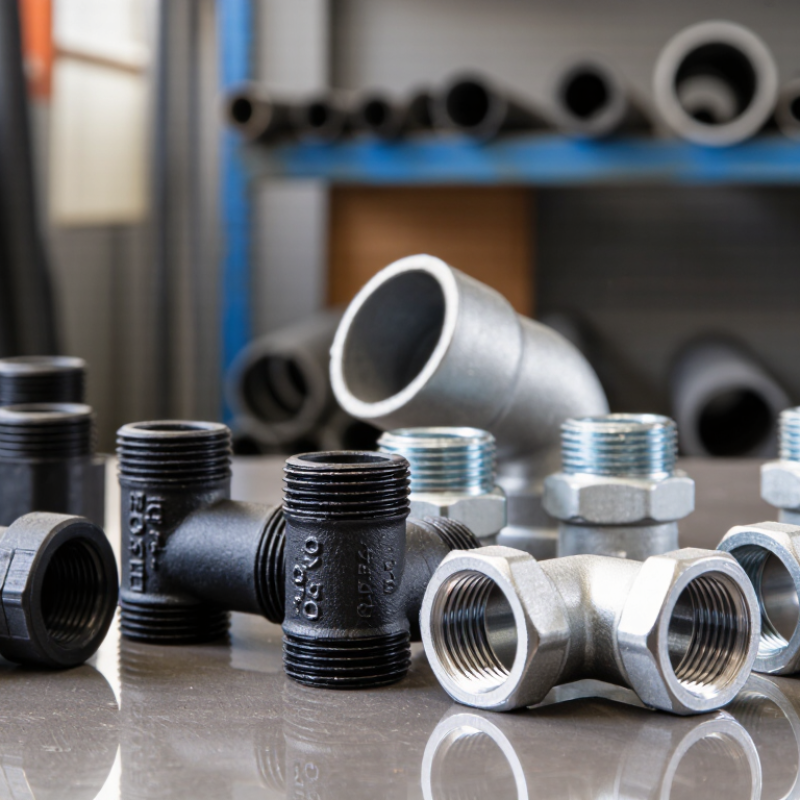
Malleable iron fittings are threaded pipe connectors made from cast iron that has been heat-treated for improved toughness. This process reduces brittleness and helps the fitting handle vibration, moderate pressure, and temperature changes. Common shapes include elbows, tees, couplings, unions, and reducers. Their threaded ends support practical installation without welding equipment.

These fittings appear in water lines, compressed-air systems, fire-protection piping, and some gas-distribution installations. Galvanized surfaces offer better resistance to moisture, while black finishes suit dry indoor services. However, malleable iron is not suitable for every chemical or temperature condition. A fitting can look strong but still fail when corrosion attacks its threads. Check the service medium, pressure rating, temperature range, and applicable local standards before installation.

Tip: Match the fitting size and thread type carefully. Small differences can cause leaks.

During field checks, inspect threads for flattening, cracks, and heavy rust. Use proper sealing material, but avoid excessive force during tightening. Over-tightening can damage both the fitting and the pipe. It is easy to focus on appearance and miss internal corrosion. I would also recheck alignment after assembly, because a slightly twisted joint may weaken nearby connections. When choosing fittings, consider accessibility for future repairs. A union may cost more, but it can save hours during maintenance. Availability matters too. An unusual size may delay a simple repair.

10 Tips for Choosing Malleable Iron Fittings

Malleable iron fittings are threaded pipe fittings made from heat-treated cast iron. They are commonly used to connect, redirect, branch, or terminate steel and iron piping in water, compressed-air, fuel-gas, fire-protection, and low-pressure steam systems. Select fittings by checking the application, thread standard, pressure and temperature requirements, corrosion conditions, size, configuration, and inspection needs.

Chart explanation

The chart groups ten practical selection tips into four decision areas. Standards and compatibility receive the greatest emphasis because thread type, nominal size, fitting configuration, and code compliance must match the piping system. Application and service conditions cover media, pressure, temperature, and corrosion exposure. Installation and quality checks address sealing, alignment, inspection, and traceability.

Assess Size, Thread Standards, and Connection Compatibility

Choosing malleable iron fittings starts with size, but nominal size is not the outside diameter. A 1-inch pipe may measure differently across schedules and regional standards. Check pipe markings, wall thickness, and fitting bore before ordering.

Fortune Business Insights valued the broader global pipe fittings market at USD 11.19 billion in 2023, projecting USD 15.33 billion by 2032. That growth reflects complex supply chains, not guaranteed compatibility. Match reducers by nominal size, then verify actual dimensions with calipers. Measure twice.

Thread standards require closer attention. ASME B1.20.1 defines NPT threads, while ISO 7-1 covers pressure-tight pipe threads. ISO 228-1 addresses threads that do not seal on the thread itself. NPT and BSPT can look nearly identical, yet their profiles and pitches differ. They should not be forced together. Confirm male and female thread types, pitch, sealant compatibility, pressure rating, and operating temperature.

Also check the connected pipe material, especially where corrosion or galvanic interaction is possible. A 2024 technical review from the European Commission notes that construction product performance depends heavily on declared specifications and installation conditions. Visual matching is not enough. Field mistakes happen when a fitting “almost fits.” Recheck the standard before tightening, and follow the relevant installation specification rather than relying on habit.

Choose the Appropriate Pressure Rating and Temperature Range

Choosing the appropriate pressure rating and temperature range is critical when selecting malleable iron fittings. A fitting may handle pressure safely at room temperature, then lose capacity as heat rises. ASME B16.3 provides pressure-temperature ratings for malleable iron fittings in Class 150 and Class 300 categories. Always check the exact table, size, connection, and material specification.

Tip: Match the fitting class to design pressure, not normal operating pressure. Include pressure surges, pump starts, and thermal expansion. A 2-inch fitting carrying hot water needs different verification than one carrying cold water. ASTM A197/A197M also defines material requirements for malleable iron castings, supporting traceable purchasing and inspection records.

Temperature deserves equal attention. Steam, compressed air, glycol, and fuel gases can create different risks. Confirm the fitting’s continuous temperature limit, then compare it with the system’s maximum upset temperature. Do not rely on a catalog headline alone. Ratings can change with thread type, corrosion, and repeated heating cycles. NFPA 13 installation guidance also emphasizes listed components and system-specific pressure conditions for fire protection piping.

Tip: Read the pressure-temperature table before reading the price. Check markings on the fitting and request compliance documents. A small mismatch may cause leakage at a threaded joint. This is easy to overlook. In practice, engineers sometimes specify pressure correctly but forget temperature cycling. That gap deserves a second review before installation.

10 Tips for Choosing Malleable Iron Fittings - Choose the Appropriate Pressure Rating and Temperature Range

Tip Selection Dimension Recommended Data or Practice Why It Matters Verification Point
1 Identify the fitting material Use malleable iron fittings manufactured to ASTM A197/A197M or an equivalent material specification. Material grade affects strength, ductility, corrosion behavior, and allowable service conditions. Check the product marking, material certificate, and applicable manufacturing standard.
2 Choose the pressure class Common threaded malleable iron options include Class 150 and Class 300 fittings, where permitted by the applicable design standard. A higher class generally provides a higher pressure-temperature rating, but the class is not simply equal to a pressure value in psi. Use the pressure-temperature tables for the exact standard, size, material, and service temperature.
3 Match the operating pressure Select a fitting whose allowable working pressure is above the system design pressure, including pressure surges and transient loads. Pumps, valves, water hammer, and thermal expansion can produce pressures higher than normal operating pressure. Compare the complete pressure profile with the fitting rating at the highest design temperature.
4 Check the temperature range For many general-purpose applications, malleable iron fittings are used in moderate-temperature services; the allowable rating must be confirmed for the actual temperature. Allowable pressure normally decreases as temperature increases, and extreme temperatures can affect sealing and material integrity. Review the applicable standard and manufacturer data for both minimum and maximum operating temperatures.
5 Confirm the connection type For threaded fittings, verify the thread form, such as NPT or another specified national or international pipe-thread standard. Mismatched thread profiles or tolerances can cause leakage, damaged threads, or unsafe assembly. Confirm thread designation, size, taper, pitch, and compatibility with the mating pipe or valve.
6 Verify nominal pipe size Select the correct nominal pipe size, typically specified in NPS or DN, and confirm the fitting bore and end dimensions. A nominal size identifies a piping size series and is not always the same as the measured inside or outside diameter. Check dimensional tables under ASME B16.3 or the designated regional standard.
7 Evaluate the fluid or gas Use malleable iron only for media that are compatible with iron and the selected sealing material, such as suitable water, air, or low-corrosivity services. Acids, aggressive chemicals, oxygen-enriched media, and certain gases may require different materials or special approvals. Review chemical compatibility, cleanliness requirements, local regulations, and service-specific approvals.
8 Consider corrosion protection Use black or zinc-coated finishes according to the environment; zinc coatings are commonly selected for improved protection in suitable indoor or mildly corrosive conditions. Moisture, condensation, salts, and chemicals can accelerate external or internal corrosion. Confirm coating type, coating standard, expected exposure, and whether additional protection is required.
9 Check installation requirements Use the correct thread sealant, apply controlled tightening, and avoid excessive force that could split the fitting or damage the threads. Poor assembly practices are a frequent cause of leakage and premature failure. Follow the applicable installation instructions and verify leak-tightness using the approved test method.
10 Confirm compliance and testing Prefer fittings with documented dimensional compliance, material traceability, and pressure or leak testing appropriate to the application. Documentation supports quality control, inspection, maintenance, and regulatory compliance. Check certificates, inspection records, marking requirements, and applicable standards such as ASME B16.3.

Important: Pressure and temperature limits vary with fitting size, pressure class, material specification, thread type, fluid, and applicable code. Always use the exact pressure-temperature rating table and installation requirements for the selected fitting before placing it in service.

Compare Coatings, Corrosion Resistance, and Service Environment

10 Tips for Choosing Malleable Iron Fittings

Tip 1

Match the coating to the service environment, not the product photograph. In dry indoor piping, a black finish may be adequate. However, condensation can quickly expose unprotected iron. Galvanized coatings offer better resistance in damp areas, but they are not suitable for every chemical atmosphere. Acidic moisture can attack zinc. I once classified a warm plant room as “indoor” and underestimated its condensation. That judgment was wrong.

Tip 2

Inspect coating coverage around threads, shoulders, and internal surfaces. These areas often suffer damage during cutting, handling, or assembly. Small scratches can become active corrosion points. For outdoor systems, consider additional protection, such as compatible paint or a sealed installation design. Do not assume a thicker coating always means longer service life. Adhesion, surface preparation, and exposure conditions matter more than appearance.

Tip 3

Check temperature, humidity, chemicals, and maintenance access before selecting fittings. High heat may weaken certain protective finishes. Chloride-rich air can accelerate corrosion near coastal facilities. In buried or wet installations, soil chemistry deserves attention. Consult current technical data and pressure ratings from qualified manufacturers. Field checks remain valuable. A fitting can meet its specification and still fail when the surrounding environment was poorly understood. That detail is easy to miss.

Evaluate Quality, Standards, Cost, and Supplier Reliability

Quality begins with traceable evidence, not a polished catalogue image.

Tip 1: Check compliance with ASTM A197/A197M for malleable iron. Tip 2: Compare dimensions, pressure ratings, and markings with ASME B16.3. Tip 3: Request heat numbers, inspection records, and thread-gauge results. Tip 4: Inspect zinc coating, burrs, cracks, and damaged threads under strong light. Small defects matter. A fitting may look acceptable but leak after installation. ISO 49 also provides relevant requirements for threaded malleable cast-iron fittings, so confirm the exact edition and application.

Cost needs a wider lens.

Tip 5: Compare total landed cost, including freight, testing, rejected pieces, and replacement labor. Tip 6: Ask for sample approval before placing a large order. Tip 7: Review tolerances, packaging, and minimum order quantities. The low quote is not always economical. I still find spreadsheets miss field delays, especially when several sizes arrive in mixed cartons. A simple cost model should include failure risk, not only unit price.

Supplier reliability should be measurable.

Tip 8: Request recent on-time-in-full records and corrective-action examples. Tip 9: Confirm production capacity, backup processes, and document control. Tip 10: Check whether batch records remain available after delivery. The World Bank’s 2023 Logistics Performance Index assessed 139 economies across six logistics dimensions, including tracking and timeliness. Use those ideas locally: measure shipment visibility, response speed, and delivery consistency. A supplier who answers quickly but cannot provide batch evidence deserves a second review.