
Made in America
Get Connected With



Choosing the right 430 Stainless Steel Strips is rarely a simple price comparison. The correct grade, thickness, temper, and surface finish must match the application. A strip used for kitchen trim faces different conditions from one used in a heat shield or stamped component.
Dr. John C. Lippold, a respected stainless-steel welding authority, once stated, “Stainless steel is not one material; it is a family of alloys.” That reminder matters here. Although 430 stainless steel offers useful corrosion resistance, magnetic behavior, and cost efficiency, it is not automatically suitable for every environment. Chlorides, moisture, forming pressure, and operating temperature can change the decision.
Small details matter. A 0.5-millimeter strip may bend smoothly, while a harder temper can crack near a tight radius. A bright finish may improve appearance, but a brushed surface can hide handling marks more effectively. Check the mill certificate. Confirm thickness tolerance, width accuracy, edge condition, and packaging protection. Ask whether the supplier can provide consistent coils or cut lengths.
Some choices remain uncertain. A low-cost offer may become expensive after rejected parts and surface defects. I have seen specifications look complete while omitting temper or finish requirements. That gap is easy to miss.
This guide presents ten practical tips for selecting 430 Stainless Steel Strips with greater confidence. It considers performance, fabrication, inspection, supplier reliability, and real production conditions. Not every recommendation fits every project. That is the point. Good selection begins with questions, not assumptions.
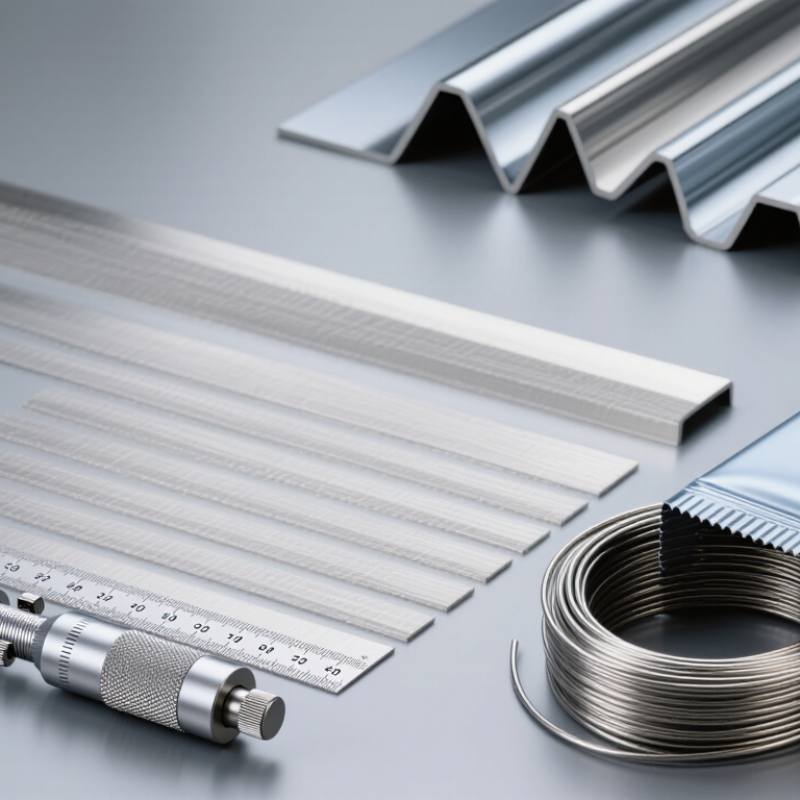
10 Tips for Choosing 430 Stainless Steel Strips?
Define Your Application and Performance Requirements
Choosing 430 stainless steel strips starts with the working environment, not the price. Identify moisture, cleaning chemicals, salt exposure, temperature, and contact with other metals. ASTM A240/A240M specifies 16.0–18.0% chromium and a maximum carbon content of 0.12% for Grade 430. This composition supports oxidation resistance, but it does not equal the corrosion resistance of austenitic grades in chloride environments.
Tip: Write the failure condition first. Will the strip rust, warp, crack, or lose spring force? A practical trial should include the real cleaning cycle and forming radius. Grade 430 is ferritic and magnetic, which can help with sensor fixtures or magnetic closures. However, its limited deep-drawing ability may create edge cracking. I have seen specifications overlook this point.
Mechanical data also needs context. ASTM requirements commonly include a minimum tensile strength near 450 MPa and yield strength near 205 MPa, depending on the product condition. ASM Handbook data places thermal conductivity near 26 W/m·K at room temperature, while thermal expansion is lower than many austenitic stainless steels. That can reduce distortion, but only when joint design and heating speed are controlled.
Tip: Specify thickness, temper, surface finish, flatness, burr limits, and test methods. Ask for heat-lot traceability and a material certificate. If the strip enters a humid food-processing area, reconsider the grade after testing. The datasheet may look suitable. Real exposure can disagree.
430 stainless steel strips suit dry indoor panels, appliance trim, and light fabrication. Their ferritic structure makes them magnetic and generally easier to form than many high-alloy grades. ASTM A240 lists typical minimum tensile strength near 450 MPa, yield strength near 205 MPa, and elongation around 22% for annealed 430 sheet. Confirm the supplied condition, because strip performance can differ after cold rolling.
Tip 1: Check the chemistry first. ISO 15510 data places chromium near 16–18% for common 430 compositions, with very low nickel. This helps control cost, but it also limits resistance in salt spray, acidic cleaners, and stagnant moisture. ASTM A240 data should be matched with the mill certificate, not assumed from the label.
Tip 2: Test the real environment. A 430 strip may look bright in a showroom, then develop tea staining beside a coastal loading door. The International Stainless Steel Forum reported global crude stainless production at about 58.4 million tonnes in 2023, yet production volume does not prove suitability for every application. Keep weld zones clean and dry. Tip 3: Review forming limits. Deep drawing, tight bends, and repeated flexing may expose cracking or springback. I would request a trial coil before approving a large order. That extra step can feel excessive, but it often reveals surface defects, burrs, and unstable hardness early.
When choosing 430 stainless steel strips, thickness should match the forming load, springback, and service temperature. Thin strip can reduce weight, but it may buckle during stamping. Thick strip improves rigidity, yet it increases cutting force and material waste. ASTM A480/A480M and EN 10088-2 show that thickness tolerances depend on the ordered range, width, and delivery condition. Do not request “standard tolerance” without a number. Specify it in millimeters.
Width deserves equal attention. Measure the usable width after slitting, not only the nominal coil width. A 0.20 mm edge variation can affect progressive dies and narrow electrical components. Ask for edge condition, camber limits, and burr height. For precision work, request a dimensional inspection report from the supplier. I would also check three points across each strip, because one center reading can hide edge thinning.
Real production scale matters. World Stainless reported approximately 58.4 million tonnes of stainless steel production in 2023, showing how widely standardized stainless products are manufactured. However, large production volume does not guarantee your required tolerance. Confirm hardness, thickness, width, and flatness on the certificate. A practical trial strip is wise. Specifications can look perfect on paper, but feeding behavior may still disappoint.
Surface finish is not decoration. It affects cleaning, friction, appearance, and later forming. Choose a finish by function, not by catalogue photograph. A bright strip may show scratches easily. A dull finish may hide small marks, but it can look uneven under angled light. The International Stainless Steel Forum reported 58.4 million tonnes of stainless steel production in 2023. That scale makes consistent inspection important. ASTM A480/A480M and EN 10151 provide useful guidance for finish, dimensions, and flatness. Still, suppliers may interpret visual grades differently.
Tips: Specify the finish code, roughness range, and inspection lighting. Request a sample coil or strip. Check both sides. Look for roll marks, pits, discoloration, and embedded particles. Edge quality deserves equal attention. Slit edges should be clean, without heavy burrs or tearing. Ask for a maximum burr height and verify it with a magnifier. Deburred edges can improve handling, but excessive rounding may change the usable width. Small details matter.
Tips: Measure flatness across the strip width and along its length. Use a calibrated table, straightedge, or laser system. EN 10151 tolerances are a starting point, not a substitute for your application test. A strip can meet a tolerance yet buckle during stamping. I have seen this happen. Recheck flatness after cutting, because residual stress may appear later. Record coil number, gauge, width, finish, edge condition, and inspection results. Photos help, but measurements decide.
Choosing 430 stainless steel strips requires more than comparing thickness and price. Supplier quality should be checked through production records, inspection methods, and sample results. Ask for a mill test certificate showing chemical composition, mechanical properties, heat number, and applicable standard. The heat number should match the material label and packing list. Small details matter.
Inspect trial strips for surface scratches, edge cracks, burrs, flatness, and consistent width. A reliable supplier can explain annealing, slitting, and cleaning controls in practical terms. Request photos of coils, protective wrapping, and loading procedures. If possible, arrange an independent inspection before shipment. I have seen polished samples hide uneven edges in bulk coils. That mistake was expensive.
Certification also needs careful verification. Check whether documents are current, traceable, and issued by a recognized testing body. Do not accept a certificate with missing batch information. For pricing, compare the complete landed cost, including packaging, inspection, freight, duties, and possible waste. A low quotation can conceal weak tolerances or delayed production. I once focused too heavily on unit price and ignored replacement risk. That judgment needed correction.
Delivery promises should include production time, inspection time, shipping schedule, and a clear response plan for delays. Confirm coil weight, strip length, packing dimensions, and delivery terms in writing. Ask how the supplier handles shortages or nonconforming material. Keep communication records. Reliable delivery is measurable, not merely promised.
| No. | Selection Dimension | Data to Verify | Recommended Acceptance Checkpoint | Commercial and Delivery Consideration |
|---|---|---|---|---|
| 1 | Grade Identification | Confirm that the material is ferritic stainless steel, grade 430, commonly identified as UNS S43000. The applicable product standard should be stated on the quotation and inspection documents. | Required Heat number, grade designation, and product form must match the purchase order. | Avoid quotations that describe the material only as “stainless steel” without a specific grade and standard. |
| 2 | Chemical Composition | For typical 430 stainless steel, chromium is generally about 16.0–18.0%, carbon is commonly limited to 0.12% maximum, and nickel is normally not intentionally added except for residual levels. Limits can vary by the selected standard. | Verify by MTC Compare the heat analysis on the mill test certificate with the specified ASTM, EN, or equivalent requirements. | A chemical analysis without a heat number should not be treated as traceable certification. |
| 3 | Applicable Standard | Common references include ASTM A240 for plate, sheet, and strip for pressure-vessel and general applications, and EN 10088-2 for corrosion-resistant steel flat products for general purposes. | Specify in PO State the exact standard, grade, condition, dimensional tolerance, and test requirements before ordering. | Different standards may use different tolerances and mechanical-property requirements, so “equivalent grade” should be approved in writing. |
| 4 | Mechanical Properties | Typical annealed ASTM requirements for 430 include a minimum tensile strength of approximately 450 MPa, minimum yield strength of approximately 205 MPa, and minimum elongation commonly specified around 22%; verify the exact edition and product thickness. | Test required Review tensile-test results and confirm that the specimen direction and testing method are identified. | Cold-reduced strip may have higher strength and lower elongation than annealed material; confirm the intended temper before comparing prices. |
| 5 | Dimensions and Tolerances | Define thickness, width, coil or cut length, edge condition, flatness, camber, and thickness tolerance. For precision strip, specify whether standard or special tolerances are required. | Measure samples Use calibrated micrometers and gauges; record measurements at agreed positions across the coil or cut pieces. | Tighter tolerances, narrow widths, slit edges, and small minimum order quantities generally increase processing cost. |
| 6 | Surface Finish | State the required finish, such as 2B, BA, brushed, or another defined surface condition. Surface requirements should include acceptable scratches, pits, roll marks, stains, and protective-film needs. | Use reference sample Approve a written surface standard or physical reference sample before mass production. | Bright-annealed and cosmetic finishes may require additional processing and stricter packaging than standard cold-rolled 2B material. |
| 7 | Certification and Traceability | Request a material test certificate containing the grade, standard, heat number, chemical analysis, mechanical results, dimensions, surface condition, and inspection date. Check whether certification is manufacturer-issued or independently verified. | Documents must match Cross-check the certificate, coil tags, packing list, and markings against the same heat number. | Third-party inspection can be considered for high-value, safety-critical, or first-time orders and should be priced separately. |
| 8 | Supplier Quality System | Evaluate documented incoming inspection, process control, calibration, nonconforming-product handling, corrective action, and final inspection procedures. A current quality-management certificate may support the assessment but does not replace product testing. | Audit evidence Request sample inspection records, calibration status, complaint-response procedures, and recent quality data with sensitive information removed. | A lower unit price may create higher total cost if the supplier has weak traceability, inconsistent slit quality, or poor corrective-action control. |
| 9 | Price Comparability | Compare quotations using the same grade, standard, thickness, width, finish, temper, quantity, packaging, inspection scope, currency, and Incoterm. Ask whether the price is based on theoretical or actual weight. | Normalize quotes Prepare a like-for-like cost sheet including material, slitting, testing, packaging, freight, duties, and applicable taxes. | Request price validity, payment terms, minimum order quantity, surcharge assumptions, and the treatment of scrap or yield loss. |
| 10 | Lead Time and Delivery Control | Confirm production lead time, inspection time, packing completion, dispatch location, shipping method, estimated transit time, and the definition of the promised delivery date. | Use milestones Set approval, production, inspection, packing, dispatch, and document-submission milestones in the purchase contract. | Check available stock versus made-to-order production, partial-shipment rules, delay notification procedures, packaging protection, and replacement or claim terms. |