What is an Integrated Circuit Chip and How Does it Work?
The Integrated Circuit Chip (ICC) is a vital component in modern electronics. It powers everything, from smartphones to advanced AI systems. According to a recent industry report, the global market for integrated circuits is projected to reach $1 trillion by 2030. This massive growth highlights the importance of ICCs in our daily lives.
Integrated Circuit Chips combine multiple electronic components into a single unit. This technology reduces size and cost, while improving performance and efficiency. Yet, the complexity of designing these chips presents challenges. Companies must balance innovation with reliability. Flaws in design can lead to significant setbacks.
The role of Integrated Circuit Chips is increasingly critical in emerging technologies. Despite their advantages, the industry faces issues like supply chain disruptions and material shortages. Reflecting on these challenges can lead to more resilient manufacturing practices. Future advancements in ICC technology hold great promise, but must address current limitations for sustainable growth.
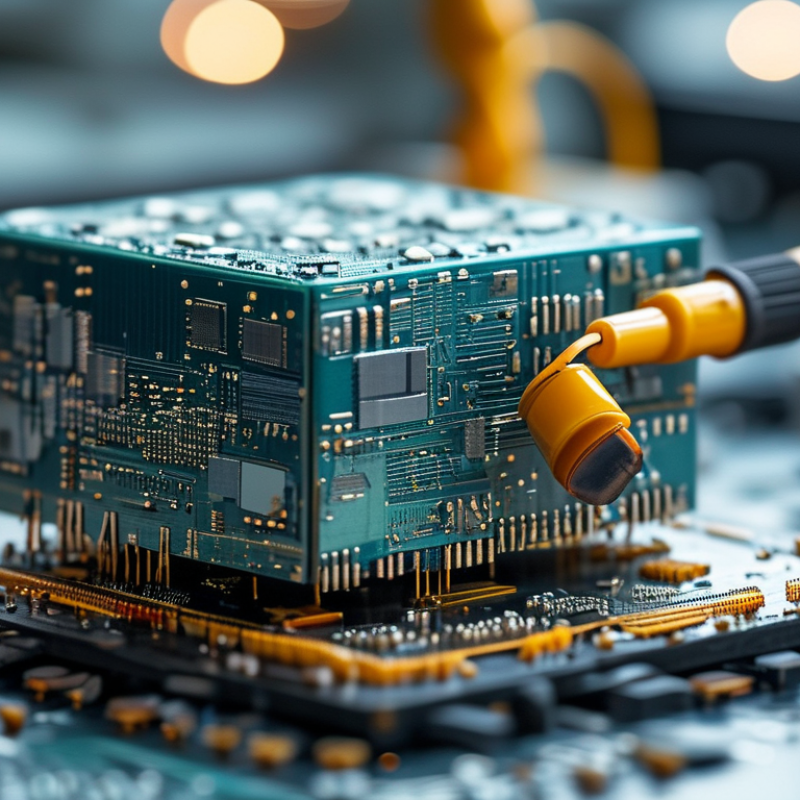
What is an Integrated Circuit Chip?
An integrated circuit chip is a small electronic device made up of millions of tiny components, such as transistors and resistors. These chips are essential in virtually all modern electronics, from smartphones to industrial machines. According to a report by IC Insights, the global market for integrated circuits reached nearly $440 billion in 2021, showcasing their critical role in technology today.
The operation of an integrated circuit chip can be complex. It processes electrical signals, allowing devices to perform tasks. Each chip contains multiple layers of circuits that are precisely engineered to work together. The manufacturing process is intricate, often resulting in defects. Reports indicate that as much as 30% of chips produced can have minor flaws. This raises questions about quality control in the semiconductor industry.
As technology advances, the demand for smaller and more powerful integrated circuit chips increases. However, the challenges of miniaturization and heat management persist. Innovations are necessary to push the boundaries of what's possible. Some industry experts believe we may need to rethink design approaches to keep pace with escalating consumer needs. Balancing performance with reliability will be a key focus for future integrated circuit development.
Historical Development of Integrated Circuits and Significant Milestones
The development of integrated circuits (ICs) has transformed modern electronics. In the late 1950s, Jack Kilby and Robert Noyce created the first ICs. They combined multiple transistors into a single chip, significantly reducing size and cost. This innovation led to miniaturization in electronics. The timeline of ICs features key milestones, such as the introduction of the microprocessor in 1971. This chip changed computing dramatically.
The 1980s and 1990s saw rapid advances in IC technology. Designers created more complex chips, increasing performance. However, challenges emerged. As chips became smaller, issues like heat dissipation and power consumption grew more prominent. The struggle for efficiency remains a concern today. In recent years, we have witnessed the development of system-on-a-chip (SoC) designs. These integrate various components, enhancing functionality.
While integrated circuits have enabled incredible technological advancements, not all developments have had smooth trajectories. Challenges in fabrication and material science continue to prompt research and innovation. The drive for smaller, faster, and more efficient chips remains a fundamental pursuit in the field. As we look forward, the evolution of ICs will continue to shape our world.
What is an Integrated Circuit Chip and How Does it Work? - Historical Development of Integrated Circuits and Significant Milestones
| Year | Milestone | Description |
| 1958 | First Integrated Circuit | Jack Kilby created the first working integrated circuit at Texas Instruments. |
| 1959 | Planar Process | Robert Noyce developed the planar process, which paved the way for modern IC fabrication. |
| 1965 | Moore's Law | Gordon Moore predicted that the number of transistors on a chip would double approximately every two years. |
| 1971 | First Microprocessor | The Intel 4004 was released, marking the beginning of the microprocessor era. |
| 1980s | Rise of ASICs | Application-Specific Integrated Circuits (ASICs) gained prominence for specialized applications. |
| 1990s | Emergence of System-on-Chip (SoC) | Integration of all components of a computer or other electronic systems onto a single chip. |
| 2000s | Increase of Nanotechnology | Utilization of nanotechnology to further miniaturize and enhance performance of ICs. |
Components and Structure of an Integrated Circuit Chip Explained
Integrated circuit chips are the backbone of modern electronics, and understanding their components is essential. These chips consist of a variety of elements, including transistors, resistors, capacitors, and diodes. Transistors act as switches, controlling the flow of electricity. Resistors limit current, while capacitors store charge. Diodes ensure current flows in one direction. When combined, these components form intricate circuits on a tiny chip.
The structure of an integrated circuit chip is fascinating. Layers are built upon one another to create a complex network. This layering allows for more components to fit into a smaller space. The process of fabricating these layers is intricate and requires precision. However, errors can occur, leading to flaws in the chips. These imperfections can affect performance and reliability, posing challenges in design and production.
Each layer plays a pivotal role in a chip's function. The arrangement is not random; each component is strategically placed. Nonetheless, achieving perfect symmetry is often unattainable. Engineers must continuously refine designs and manufacturing processes. Balancing performance, cost, and size remains a relentless challenge. Despite this, ongoing innovations promise a future with even more advanced integrated circuits.
How Integrated Circuits Function: Key Operating Principles
Integrated circuits (ICs) are the backbone of modern electronics. They combine multiple electronic components into a single chip. This miniaturization enhances efficiency and reduces cost. The structure includes transistors, capacitors, and resistors, all etched onto a silicon wafer. These components work together to process and store data.
The key operating principle of integrated circuits lies in their ability to manage electrical signals. Transistors act as switches, controlling the flow of electricity. When the transistor is on, it allows current to pass through. When off, it blocks the current. This on-off capability creates binary data, which forms the basis of digital computing. Capacitors store charge, helping smooth out electrical fluctuations. Resistors adjust current flow to protect sensitive components.
Despite their sophistication, ICs aren't without challenges. Design errors can lead to malfunctions. Overheating issues can also arise if power consumption isn’t properly managed. As technology evolves, the complexity of circuits increases. This demands greater precision and careful thought. Ongoing research focuses on making ICs more efficient while keeping manufacturing costs low.
The Role of Integrated Circuits in Modern Electronics and Technology
Integrated circuits (ICs) play a crucial role in modern electronics and technology. They are the heart of everyday devices, from smartphones to computers. Their complex design allows for multiple electronic functions in a compact form. This miniaturization has revolutionized how we think about technology.
In various applications, ICs enhance performance and efficiency. They reduce size and power consumption significantly. This combination leads to lighter devices and longer battery life. However, the rapid advancements in IC technology also present challenges. The increasing complexity of these circuits can make troubleshooting difficult. Moreover, designing for scalability can result in unforeseen issues during production.
The impact of integrated circuits extends to numerous industries. From healthcare to automotive, ICs are essential. They enable innovations like wearable health monitors and smart vehicles. Yet, as our reliance on these technologies grows, we must remain vigilant. Security vulnerabilities often accompany new advancements. As we integrate ICs into more aspects of our lives, the need for robust security measures becomes paramount.