Made in America
Get Connected With



Teardrop Banners have become familiar at trade shows, outdoor races, retail openings, and community events. Their curved fabric follows the wind, while the pointed base creates a recognizable silhouette from a distance. Yet shape alone does not guarantee attention.
Industry data explains their growing relevance. PQ Media’s Global Out-of-Home Advertising Forecast 2024–2028 identifies continued investment in measurable outdoor media. Grand View Research also reports steady growth across the global outdoor advertising market. These findings support a practical idea: brands still need physical visibility, even as digital advertising expands. A banner beside a registration desk can guide people before a phone notification does.
Visual communication expert David Ogilvy once said, “You cannot bore people into buying.” His warning applies directly to Teardrop Banners. Small text, weak contrast, and crowded graphics disappear quickly. Strong banners use one message, clear spacing, and colors that remain readable under changing daylight.
The best options in 2026 will not simply look attractive online. They should use durable fabric, stable bases, clean stitching, and replaceable printed skins. Weather matters. So does transport.
Some buying decisions remain imperfect. A heavier base improves stability but reduces portability. A larger banner gains visibility but demands more storage. There is no universal winner.
This guide compares Teardrop Banners through those real-world details. It considers print quality, frame strength, setup time, weather performance, and total value. The goal is not to praise the loudest design. It is to identify the banner that performs reliably when conditions become less than ideal.
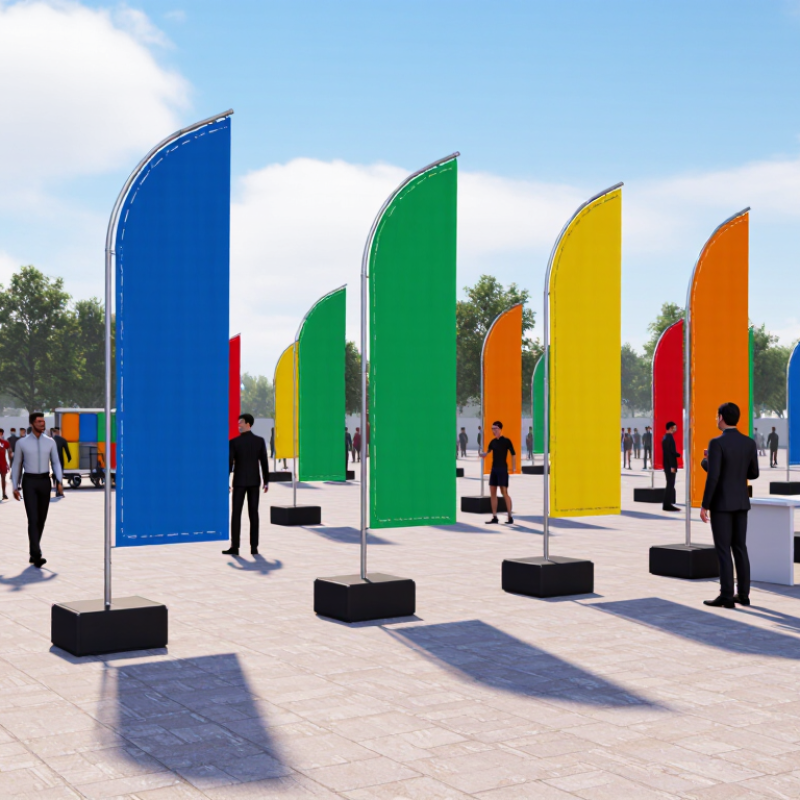
Teardrop banners are portable fabric signs with a curved, feather-like profile. Their shape stays readable when wind moves across the surface. A typical system includes a printed polyester flag, a flexible fiberglass or aluminum pole, and a weighted base. The pole creates tension. The base controls stability. In practical installations, small gaps between pole sections can cause wrinkles and uneven edges. That detail is easy to miss.
The best 2026 models should combine weather-resistant dye-sublimated fabric, reinforced sleeves, and tool-free assembly. According to the Outdoor Advertising Association of America, U.S. out-of-home advertising revenue reached about 9.96 billion dollars in 2023. This shows why physical visibility still matters beside digital campaigns. Grand View Research also valued the global digital signage market at more than 27 billion dollars in 2023. Teardrop banners offer a lower-tech complement, especially where screens are impractical.
Their main uses include entrances, sports areas, trade events, retail sidewalks, and temporary directional points. A single-sided print may work for one-way viewing. Double-sided construction suits busy pedestrian zones. I prefer wider bases on grass and heavier water-fill bases on pavement. Still, no banner is universally best. A lightweight frame travels easily, but it may move too much outdoors. Buyers should check wind guidance, fabric certification, print color consistency, and replacement-part availability. Some specifications remain vague. That deserves more scrutiny in 2026.
A high-quality teardrop banner begins with fabric that handles sunlight, moisture, and repeated folding. Polyester around 110–130 gsm often balances color clarity with manageable weight. Denser fabric can look richer, but it may dry more slowly after rain.
Hold the material toward a lamp. Thin areas and an uneven weave become obvious. Looks can mislead.
The print should remain readable from several meters away. Sharp edges matter more than excessive color brightness. Check whether the design appears on one side or both sides. Dye-sublimated graphics usually resist cracking because the ink becomes part of the fabric. Still, prolonged ultraviolet exposure will fade any banner. Ask for tested colorfastness data, not vague durability claims.
I prefer reinforced pole pockets and double stitching around the top curve. That seam carries surprising tension.
The frame needs flexibility without feeling flimsy. Fiberglass poles usually bend smoothly, while poorly finished connectors can split during assembly. A stable ground base is equally important. Test it outdoors on a mildly windy day, then inspect the pole, stitching, and base plate. I once trusted a lightweight base because it was easy to carry. It tipped repeatedly on firm pavement. That mistake changed my purchasing checklist. Look for clear dimensions, replacement-part availability, washing instructions, and a realistic packed weight. These details reveal more than polished product photos.
What Are the Best Teardrop Banners in 2026?
Top Teardrop Banner Types for Different Display Environments
Teardrop banners work best when their base matches the display environment. For outdoor markets, parks, and sports events, choose a ground-stake banner. Its pointed stake anchors the pole in soil, while the curved fabric remains visible above crowds. Check the ground before setup. Hard or rocky surfaces can make this option unreliable.
For paved areas, a cross-base banner offers better flexibility. Add a water-filled or sand-filled weight when wind increases. I have found this setup practical near entrances and sidewalks, where drilling is impossible. It still needs monitoring. A sudden gust can move an underweighted base across smooth concrete.
Indoor exhibitions usually benefit from a flat weighted base. It takes little floor space and looks tidy beside product displays. Double-sided printing helps visitors read the message from both aisles. However, extra fabric can increase wind resistance from doors or ventilation systems. That detail is easy to overlook.
Beach events and temporary outdoor promotions need rust-resistant hardware and a water base. Use quick-dry fabric when moisture is likely. For repeated transport, select a lightweight pole system with a protective carry bag. Small scratches can weaken fittings over time. I once underestimated setup time because the pole sections looked simple. A short practice assembly would have prevented that delay.
The best banner is not always the largest. Visibility, stability, portability, and weather conditions should guide the choice. Test the complete display before the event, not just the printed fabric.
| What Are the Best Teardrop Banners in 2026? — Top Teardrop Banner Types for Different Display Environments | |||||
|---|---|---|---|---|---|
| Banner Type | Best Display Environment | Typical Base or Mount | Key Advantages | Main Considerations | Best For |
| Indoor Teardrop Banner | Indoor trade shows, retail spaces, reception areas, and event venues | Compact cross base or small flat base | Lightweight, quick to assemble, and easy to move between locations | Designed primarily for indoor use; an unweighted base can be less stable in busy walkways | Promotions and directional messaging in sheltered spaces |
| Ground-Spike Teardrop Banner | Grass, soil, sand, and other penetrable outdoor surfaces | Ground spike inserted into the surface | Simple setup without a wide base; useful on lawns and at outdoor events | Not suitable for hard floors or pavement; stability depends on ground conditions and proper installation | Sports fields, outdoor markets, and roadside event areas where placement is permitted |
| Cross-Base Teardrop Banner | Indoor floors and sheltered, level outdoor areas | Folding cross-shaped base; optional compatible ground stake on some systems | Portable, folds for transport, and works on surfaces where a spike cannot be used | On exposed outdoor sites, it may need a compatible weight; check the pole and base system’s specifications | Events that move between indoor venues and sheltered outdoor locations |
| Weighted-Base Teardrop Banner | Hard, level surfaces such as pavement, concrete, and indoor floors | Flat metal base or a compatible fillable weight | Provides a freestanding option where ground penetration is not possible | Heavier bases can be less convenient to carry; added weight does not make a banner suitable for severe weather | Storefronts, paved event sites, and venues with hard flooring |
| Water- or Sand-Fillable Base | Outdoor setups on hard surfaces, especially where extra base weight is useful | Fillable base or compatible ballast bag | Can be transported empty and filled at the setup location | Requires access to water or sand; check for leaks, secure the banner correctly, and empty before transport | Outdoor promotions and temporary displays on pavement or other non-penetrable surfaces |
| Large-Format Teardrop Banner | Open areas where the display needs to be visible from farther away | Base selected to match the banner system and surface | Offers a larger printed area and greater visibility at a distance | Requires more transport and setup space; larger banners can catch more wind and need careful site selection | Large event entrances, open exhibition areas, and outdoor gathering spaces in suitable conditions |
| Compact Teardrop Banner | Small booths, counters, narrow aisles, and limited indoor spaces | Small cross base or compact compatible base | Easy to transport and fits where a full-size display may obstruct movement | Has less visual presence at a distance; check that the artwork remains legible at the finished size | Tabletop-adjacent displays, compact vendor booths, and indoor wayfinding |
| Selection note: Teardrop banner dimensions, base compatibility, and wind guidance vary by system. Check the supplier’s specifications for the assembled height, suitable surfaces, and recommended operating conditions. Take banners down in strong or gusty winds, storms, or other severe weather. | |||||
What Are the Best Teardrop Banners in 2026?
Choosing a teardrop banner starts with its material, not its artwork. Outdoor polyester usually handles light rain and repeated folding better than thin indoor fabric. A dense weave also reduces glare under strong sunlight. Check the fabric’s stitching around the pole sleeve. Weak seams can fail before the printed surface does. I once selected a lightweight banner for transport convenience, but wind made it twist constantly. That decision looked efficient and was not.
Size should match viewing distance and transport limits. A compact banner suits a café entrance or a crowded trade table. Larger versions attract attention across parking areas, but they need heavier bases. Printing quality depends on dye penetration, color consistency, and edge alignment. Dye-sublimated graphics often remain readable after washing. Ask for a physical proof when exact colors matter. Screens can mislead you.
Stability deserves practical testing. A cross base may work indoors, while a water-fillable base offers better outdoor support. Sandbags add security, though they reduce portability. On uneven pavement, adjustable feet can prevent annoying movement. Check the pole’s flexibility and the replacement process before ordering. A banner that installs quickly saves staff time. Still, “wind-resistant” is not a fixed measurement. Weather changes fast, and no lightweight display should be trusted in severe conditions.
The best teardrop banner depends on your location, message, and campaign duration. A compact banner suits café entrances, trade-show aisles, and crowded sidewalks. A larger model creates stronger visibility across parking lots or outdoor events. The choice is practical, not glamorous. According to the OAAA 2024 revenue report, U.S. out-of-home advertising reached $9.1 billion in 2023, showing continued demand for visible, location-based marketing. Your banner should support that visibility without blocking pathways or competing with nearby signs.
Start with the goal. For brand awareness, choose a tall banner with high-contrast graphics and minimal wording. For lead generation, add a short offer and a scannable QR code. PPAI’s 2024 Consumer Study found that 83% of consumers enjoy receiving promotional products, but usefulness strongly influences retention. That lesson applies here: a clear message works better than decorative clutter. Keep the main message readable from several meters away. Test it in daylight.
Material quality matters too. Look for weather-resistant fabric, reinforced stitching, and a stable cross base or ground spike. A lightweight frame helps transport, but it may struggle in strong wind. I have seen attractive banners fall during ordinary gusts. That mistake is easy to overlook. Check replacement-part availability, print color consistency, and setup time before ordering. A banner that takes ten minutes to assemble may slow a busy event team. Measure the venue first. Small details often decide whether the display performs well.