
Made in America
Get Connected With



Magnet Animal Toys are entering 2026 with stronger demand for tactile learning, collectible play, and screen-free interaction. Global buyers are watching this category closely. Circana’s global toy industry reporting shows that toys connected to creativity, learning, and family engagement continue to attract consumer attention. Grand View Research also identifies educational toys as a growing market, supported by parents seeking practical developmental value.
The opportunity looks colorful. Think magnetic farm animals, snap-together dinosaurs, and soft-touch ocean creatures on a retail shelf. Yet product quality cannot be judged by appearance alone. Magnet strength, encapsulation, labeling, age grading, and drop-test performance require careful review. The U.S. Consumer Product Safety Commission has repeatedly warned about high-powered magnets. CPSC Chair Alex Hoehn-Saric stated, “Magnets are not toys.” That short sentence deserves serious attention.
For global buyers, the best Magnet Animal Toys should combine secure construction, clear instructions, attractive packaging, and measurable play value. Relevant benchmarks include ASTM F963 in the United States and EN 71 requirements in Europe. These standards do not replace supplier audits or independent testing. They support them.
This guide compares product concepts, buyer appeal, safety documentation, and sourcing practicality for 2026. Some market forecasts may overstate growth. That is worth remembering. Real performance still depends on repeat orders, retailer feedback, and defect rates. A clever animal shape may win a child’s attention. Reliable engineering earns the buyer’s trust.
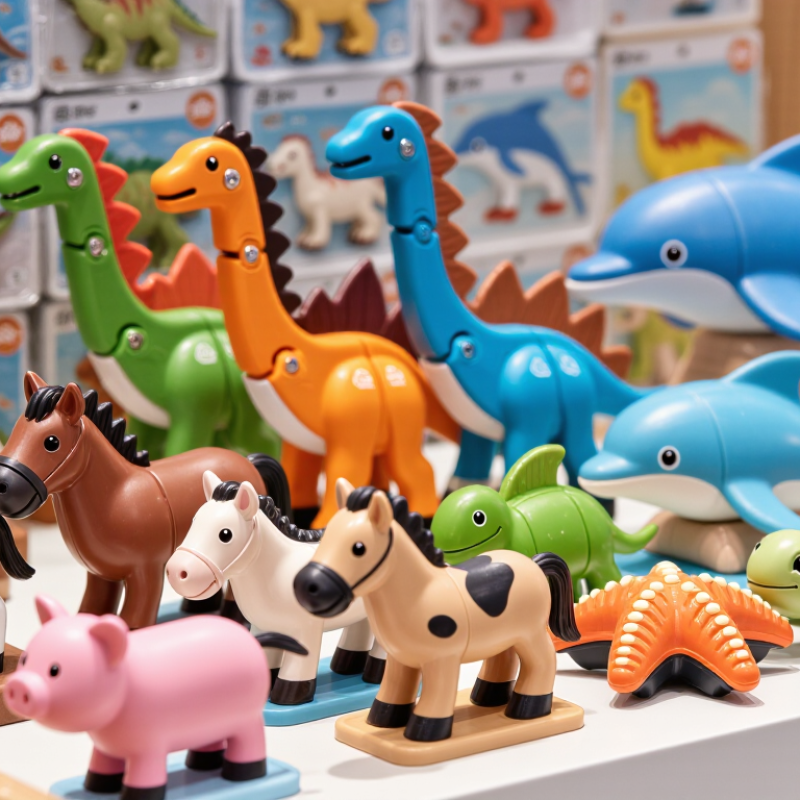
Magnet animal toys are playthings that use magnetic force to connect, move, or balance animal-shaped parts. Magnets may sit inside ears, tails, feet, or separate puzzle pieces. When opposite poles face each other, they attract. Matching poles can push apart. This creates movement without batteries, motors, or complicated controls. A child might bring two penguin halves together and feel a soft click. The toy then becomes a small puzzle, model, or moving creature.
For global buyers, the mechanism is only one part of quality. During sample checks, inspect whether each magnet remains fully enclosed after repeated drops and twisting. A loose magnet is a serious safety concern. Check the shell for sharp edges, weak seams, and peeling paint. The magnetic pull should be strong enough for play, but not unnecessarily powerful. Clear age guidance and multilingual instructions also support safer use. Test the packaging, too. A damaged carton can hide a damaged toy.
Our early assumption was simple: a stronger magnet meant a better product. That was incomplete. Some children prefer easier connections and lighter parts. Buyers should request material records, batch testing, and applicable safety documentation for each market. Designs should also consider small-part risks, cleaning needs, and storage. A clever animal shape may attract attention, but durability decides whether it survives real play. One test is never enough. Repeated handling often reveals the truth.
Magnet animal toys now combine imaginative play, early learning, and compact storage. Buyers can choose animal assembly sets with magnetic heads, legs, tails, and body sections. These parts help children explore balance, shape recognition, and simple construction. Strong connections matter, but excessive magnetic force can make small parts difficult to separate. In practical inspections, I check seams, attachment points, and repeated pull resistance. A bright sample is not automatically a safe sample.
Magnetic animal puzzles offer another popular format. Children match animal halves, habitats, or colorful body patterns. Wooden pieces feel warmer, while plastic pieces usually support sharper shapes and easier cleaning. Some educational sets include counting tokens, habitat cards, or movable eyes. These features increase learning value without adding electronic components. However, crowded designs may confuse younger users. Simpler layouts often perform better in real classrooms and homes.
Plush animal toys with enclosed magnetic closures create a softer play experience. They suit pretend play, travel kits, and quiet indoor activities. Their magnets should remain fully sealed inside reinforced compartments. Buyers should request material details, age guidance, and destination-specific safety test reports. Relevant requirements may include EN 71, ASTM F963, or ISO 8124, depending on the market. Testing documents need matching product samples. This step is easy to overlook. A small stitching weakness can change the entire risk assessment.
For global buyers reviewing 2026 magnet animal toys, safety must lead the purchasing decision.
A cute panda or crocodile can hide serious risks when magnets detach. The U.S. Consumer Product Safety Commission reported nearly 2,400 emergency department treatments for magnet ingestion from 2017 to 2021. Several cases involved intestinal perforation, surgery, and death.
Reliable suppliers should verify age grading, magnet retention, and small-parts performance before shipment. Testing should follow applicable requirements, including ASTM F963, EN 71-1, or ISO 8124-1, depending on the destination market. Magnets must remain secure after repeated drops, twisting, pulling, and chew-like stress.
A loose magnet is not a minor defect. It can be swallowed by a curious child within seconds.
Buyers should request current laboratory reports, material declarations, production samples, and traceable batch records. Check seams around animal ears, tails, paws, and removable accessories. These areas often receive less attention during visual inspection.
Packaging should provide clear age warnings and safe-use instructions in the destination language. Testing once may not be enough. Mold changes, adhesive aging, and factory substitutions can alter performance.
I have seen attractive samples pass inspection, while later batches felt weaker and less consistent. That uncomfortable gap deserves review. Safety is not proven by appearance.
A reliable evaluation begins with a physical sample, not a polished catalog image. Check the animal’s seams, paint edges, surface texture, and overall balance. Magnets should remain fully enclosed, even after repeated twisting and dropping. Test several samples from different production batches. One perfect sample proves very little.
Ask suppliers for material details, magnet specifications, age grading, and recent test reports. Confirm that the reports match the exact product, not a similar model. A strong supplier should explain magnet placement, adhesive selection, inspection points, and rejected-unit handling. Request batch codes and production photos. These details make quality claims easier to verify.
Packaging also deserves close attention. A small tear can expose a toy during transport. Measure carton strength, inner protection, labeling space, and moisture resistance before placing a large order. Factory audits can reveal crowded storage, inconsistent work instructions, or weak final inspections. Do not rely on low prices alone. Cheap samples may hide unstable workmanship. No checklist is perfect. I would still retest products after shipping changes, because vibration and temperature can expose weaknesses that factory testing misses.
In 2026, magnet animal toys are shifting from simple desk novelties to tactile learning products. Global buyers increasingly seek realistic textures, clear animal forms, and quiet play value. Soft-touch coatings, rounded edges, and sealed magnetic parts are becoming practical design priorities. During product reviews, I examine seam quality, magnet retention, odor, and repeated assembly. Small flaws matter. A loose panel can change the entire safety assessment.
Market demand is also moving toward compact, screen-free play. Families want toys that fit travel bags, classroom shelves, and small apartments. Modular animal sets support matching, storytelling, and basic STEM activities without requiring batteries. Buyers are requesting age guidance, material declarations, test records, and traceable production details. These documents cannot replace hands-on inspection. They do, however, make supplier comparisons more reliable. Regional preferences still differ; a farm-animal set may sell well in one market but require different species elsewhere.
Sustainability is influencing purchasing decisions, though the message is sometimes overstated. Recyclable cartons help, but mixed materials and plastic windows can weaken the claim. Better suppliers are reducing unnecessary inserts and improving carton strength for international shipping. Personalization is another growing trend, including local languages and habitat themes. Yet excessive customization can increase costs and confuse children. The strongest 2026 designs balance visual charm, educational purpose, durable construction, and responsible magnet containment. That balance remains difficult to perfect.
Global buyer data table focused on product design, safety compliance, merchandising, and sourcing priorities
| Trend / Product Dimension | Verified Market or Regulatory Data | 2026 Buyer Opportunity | Recommended Product Direction | Sourcing Checkpoint |
|---|---|---|---|---|
| Early-learning and STEM positioning | Animal classification, matching, counting, sequencing, and basic magnetic attraction can support play-based learning. Products marketed to children must still meet the toy-safety rules applicable in the destination market. | Educational value is easier to communicate to parents, schools, museums, and specialty retailers than decoration-only positioning. | Use animal sets with sorting cards, habitat scenes, simple counting tasks, and age-appropriate instruction cards. | Validate age grading, instructional claims, artwork accuracy, and safety testing for the complete assembled toy. |
| Age segmentation | Small-parts requirements differ by age category. In the United States, products intended for children under 3 are subject to small-parts restrictions; products for older children may require choking-hazard warnings when applicable. | Clear age architecture helps buyers manage assortment risk and reduces confusion between preschool products and collectible-style products. | Create distinct preschool, 3+, 6+, and advanced model-building ranges only when the design and testing support the stated age. | Confirm age grading through risk assessment, small-parts testing, packaging review, and destination-market requirements. |
| Magnet safety and containment | Swallowed high-powered magnets can attract each other through intestinal tissue and may cause serious injury. Magnet products require dedicated hazard assessment, secure retention, and applicable magnet testing. | Safety transparency is a decisive trust factor for parents, schools, and international retailers. | Prefer fully enclosed magnets, mechanically secured parts, rounded forms, and designs that do not release magnets after foreseeable use or abuse. | Require magnet retention, pull-force, drop, torsion, bite, and abuse testing where applicable; review every accessible component. |
| United States compliance | ASTM F963-23 is incorporated into the U.S. mandatory toy-safety framework through 16 CFR Part 1250. Children’s products also require applicable Children’s Product Certificates and tracking information. | A complete compliance file supports wholesale onboarding, customs documentation, and marketplace listing reviews. | Prepare a U.S.-specific technical file covering materials, coatings, magnets, labels, packaging, and test reports. | Check ASTM F963-23, CPSIA requirements, lead and phthalate limits, tracking-label details, and certificate documentation. |
| European Union compliance | EN 71 is the primary European toy-safety standard series. The EU General Product Safety Regulation has applied since 13 December 2024, adding broader product-safety and traceability obligations. | EU buyers increasingly expect traceable documentation, responsible-person information, warnings, and online product-safety details. | Build multilingual packaging, digital product information, batch identification, and a documented risk-assessment process. | Review EN 71-1, EN 71-2, EN 71-3, REACH restrictions, GPSR traceability, warnings, and importer or responsible-person details. |
| Animal-theme breadth | Animal themes can be organized by domestic, farm, jungle, ocean, polar, insect, dinosaur, and endangered-species groups. The category supports repeat purchases through collection and habitat expansion. | Modular collections allow buyers to test a small opening assortment and add complementary habitats or species later. | Use common connection points, consistent scale within each series, and color-coded habitat packaging. | Confirm dimensional compatibility, color consistency, replacement-part availability, and accurate species labeling. |
| Sustainable-material claims | Recycled, bio-based, biodegradable, and recyclable are different claims. A material claim must be supported by evidence and must not imply that a finished toy is recyclable when magnets, coatings, adhesives, or mixed materials prevent normal recycling. | Transparent material communication can improve buyer confidence and reduce greenwashing risk. | Reduce unnecessary inserts, identify material types, use right-sized packaging, and separate detachable materials where practical. | Request material declarations, recycled-content evidence, ink and coating information, and destination-market packaging guidance. |
| Digital and marketplace readiness | Online listings need accurate age guidance, warnings, dimensions, materials, assembly information, and traceability data. Safety information should remain visible before purchase where required. | Better product data reduces listing delays, customer questions, returns, and safety-related misunderstandings. | Supply high-resolution images, assembly diagrams, safety icons, product dimensions, carton data, and multilingual copy. | Match online claims with laboratory reports, packaging artwork, barcode data, carton marks, and technical documentation. |
| Giftable and travel-friendly formats | Compact, lightweight products generally simplify parcel fulfillment and seasonal merchandising, but small components can increase choking and loss risks. | Counter displays, starter packs, and compact activity kits can serve gift, museum, education, and travel channels. | Offer secure storage trays, resealable packaging, low-volume starter sets, and clearly stated piece counts. | Verify packaging durability, magnetic containment after opening, carton efficiency, gross weight, and transport-drop performance. |
| Quality consistency and repeatability | Magnet strength, paint adhesion, seam integrity, odor, color, and dimensional variation can affect both safety and customer satisfaction. | Repeatable quality is especially important for multi-country retail programs and replenishment orders. | Establish approved samples, golden samples, incoming inspection criteria, and lot-level traceability. | Define acceptance limits for appearance, dimensions, magnet retention, coating, packaging, and barcode readability before mass production. |