
Made in America

Get Connected With

JointsCouplings.com White Logo

Opening Hours M-F: 07:00 AM to 4:00 PM (PST)

2026 Top Conveyor Belt Scale Manufacturers Worldwide

As bulk material handling becomes more data-driven, reliable weighing is no longer a minor conveyor accessory. A Conveyor Belt Scale measures moving material continuously, helping mines, quarries, ports, cement plants, and grain facilities control throughput. In 2026, manufacturers compete through sensor stability, signal processing, installation support, and software integration. The strongest suppliers understand dusty transfer points, vibration, belt misalignment, and changing moisture levels. These details matter.

This worldwide overview examines leading conveyor belt scale manufacturers through practical buying criteria rather than brand visibility alone. It considers weighing accuracy, calibration procedures, load-cell design, speed measurement, controller usability, diagnostics, spare-parts access, and regional service capacity. Independent testing, published technical data, customer experience, and application history should guide every assessment. Marketing claims can sound impressive. Field performance is harder to fake.

The selection process also recognizes that one model cannot suit every conveyor. A short aggregate conveyor may need a compact, rugged system, while a port terminal demands high availability and strong data connectivity. Installation quality remains critical; even an excellent instrument can produce poor results when idlers, belt tension, or alignment are neglected. No ranking is perfect. Conditions change. Available evidence is sometimes uneven, so readers should question unclear claims and verify current specifications, certifications, warranty terms, and local support. This approach aims to offer useful, balanced guidance for engineers, plant managers, and procurement teams planning dependable material measurement in 2026.
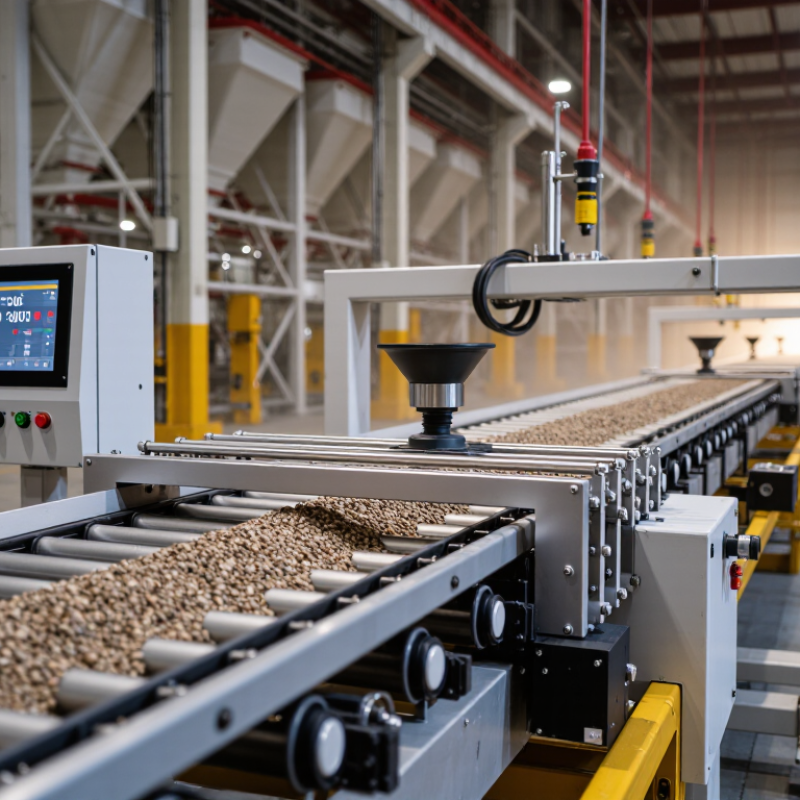
2026 Top Conveyor Belt Scale Manufacturers Worldwide

What Conveyor Belt Scales Are and How They Work

A conveyor belt scale measures the mass flow of bulk material while it travels on a moving belt. It does not weigh a stopped truck or a filled hopper. Instead, load cells sense the material’s force on a short belt section. A speed sensor records belt movement. The integrator combines both signals and calculates tonnes per hour.

The principle is simple: material flow equals belt load multiplied by belt speed. For example, a belt carrying 80 kilograms per meter at 2 meters per second delivers about 576 tonnes per hour. The result depends on stable tracking. Belt tension, idler alignment, moisture, vibration, and material surges can distort readings. Small errors become expensive across continuous production.

Demand for dependable bulk measurement remains substantial. The U.S. Geological Survey’s Mineral Commodity Summaries 2025 reports global iron ore mine production above 2.4 billion metric tons in 2024. That scale makes continuous measurement more practical than repeated manual sampling. ISO 5048 also provides calculation principles for belt conveyor capacity and operating conditions.

Calibration still deserves attention. Too often, operators trust a clean display before checking the belt itself. A test chain, material test, or verified reference load can expose drift. Dust may enter sensors. Cold weather may change belt behavior. The technology is accurate, but not magical. Field conditions decide whether the number deserves confidence.

2026 Top Conveyor Belt Scale Manufacturers Worldwide: What Conveyor Belt Scales Are and How They Work

Conveyor belt scales continuously measure the material flow on a moving belt. Load cells detect the material load, while a speed sensor measures belt velocity. The integrator combines both signals over time to calculate mass flow and totalized throughput.

The chart shows the recognized OIML R 50 accuracy classes commonly used to describe conveyor belt scale performance. A lower percentage represents a tighter allowable measurement error. Actual results depend on belt alignment, material consistency, calibration, belt speed, loading conditions, and installation quality.

Reference framework: OIML R 50 continuous totalizing automatic weighing instruments.

Key Criteria for Ranking Global Manufacturers in 2026

Ranking the 2026 Top Conveyor Belt Scale Manufacturers requires more than checking market visibility.

According to Fortune Business Insights, the global conveyor belt market reached about USD 4.49 billion in 2023 and may reach USD 6.27 billion by 2032. This expansion increases pressure for dependable weighing, not attractive brochures.

Measurement performance should lead the evaluation.

Buyers should verify stated accuracy, repeatability, zero stability, and calibration procedures under dust, vibration, moisture, and changing belt loads. Compliance with OIML R50 or comparable national standards adds credible evidence.

A test certificate matters. So does field data from mines, ports, and aggregate plants. Manufacturers should also disclose sensor design, speed compensation, signal processing, and maximum belt capacity.

According to MarketsandMarkets, the conveyor system market is projected to grow from approximately USD 7.6 billion in 2023 to USD 10.6 billion by 2028, making scalable integration increasingly important.

Service capability deserves equal weight.

Check commissioning records, spare-parts availability, remote diagnostics, software update controls, and technician response times. The International Society of Automation highlights cybersecurity and lifecycle management as essential for connected industrial systems.

Therefore, secure access and clear data ownership should influence rankings. Price alone misleads. A lower initial cost can become expensive after repeated recalibration or long downtime.

No ranking is perfect. Regional climate, material flow, and maintenance skill can change results. Manufacturers with transparent test methods and verified customer evidence should rank higher than those offering only impressive specifications.

Leading Conveyor Belt Scale Manufacturers by Region

Conveyor belt scale manufacturers differ by region because mining, quarrying, ports, and processing plants create different measurement demands. North American manufacturers often focus on rugged frames, remote diagnostics, and integration with plant control systems. Their equipment commonly serves high-throughput aggregate and mining operations. Field experience matters here. Dust, vibration, and uneven loading can quickly expose weak designs.

European manufacturers often emphasize measurement stability, energy efficiency, and strict documentation. Many develop compact systems for recycling, cement, food, and bulk-material facilities. Calibration procedures are usually detailed, with attention to belt alignment and material flow. In Asia-Pacific, manufacturers serve fast-growing mining, power, and infrastructure markets. They often provide adaptable configurations, local installation support, and cost-conscious maintenance plans. However, lower purchase prices can hide service gaps. Buyers should inspect spare-part access and technician training before committing.

Manufacturers in Latin America, the Middle East, and Africa frequently design for remote sites, harsh weather, and limited maintenance access. Reinforced components and straightforward inspection routines can be more valuable than advanced displays. Reliable suppliers should explain accuracy limits under changing belt speed, moisture, and loading conditions. Independent testing records also deserve careful review. No regional ranking is flawless. Some published comparisons remain incomplete because service quality changes between countries. A practical evaluation should include site trials, calibration checks, warranty terms, and references from similar operations. Small errors become expensive when conveyors run continuously.

2026 Top Conveyor Belt Scale Manufacturers Worldwide - Leading Conveyor Belt Scale Manufacturers by Region

Region Manufacturing and Product Focus Major Application Sectors Typical System Accuracy Common Belt-Speed Range Typical Belt-Width Range Frequently Referenced Compliance Frameworks Key Selection Priorities
Asia-Pacific High-volume production of belt-weighing assemblies, integrators, load-cell modules, speed sensors, and digital weighing controllers. Products commonly target bulk-material handling and process automation. Coal, aggregates, cement, mining, ports, steel, power generation, food processing, and fertilizer. Approximately ±0.25% to ±1.0% of totalized material, depending on installation quality, calibration, belt condition, and operating conditions. Approximately 0.1–5.0 m/s; higher speeds may be available for specialized installations. Approximately 400–2,400 mm, depending on conveyor design and material flow. OIML R 50 where legal-for-trade approval is required, together with applicable national metrology and electrical-safety requirements. High humidity, dust protection, local service capability, load-cell sealing, signal stability, and compatibility with existing PLC or SCADA systems.
Europe Strong emphasis on engineered weighing systems, process integration, traceability, hygienic designs, energy efficiency, and metrological compliance. Mining, quarrying, cement, recycling, chemicals, food ingredients, ports, and automated manufacturing. Approximately ±0.25% to ±0.5% for well-engineered systems under controlled operating conditions; actual results depend on conveyor geometry and calibration. Approximately 0.1–4.0 m/s for common industrial applications. Approximately 400–2,000 mm for common industrial conveyor configurations. OIML R 50 and the European Measuring Instruments Directive, including MI-006 for continuous totalizing weighing instruments, where applicable. Legal-for-trade certification, electromagnetic compatibility, functional safety, low-maintenance design, data logging, and integration with Industry 4.0 platforms.
North America Broad availability of rugged conveyor belt scales, smart integrators, retrofit kits, and application-specific systems for heavy-duty bulk handling. Aggregates, mining, coal, cement, grain, biomass, steel, recycling, and bulk terminals. Approximately ±0.25% to ±1.0% of totalized material, with performance affected by belt tension, idler alignment, loading profile, and calibration practices. Approximately 0.1–5.0 m/s for typical heavy-duty and process conveyors. Approximately 450–2,400 mm, with wider systems used in high-capacity bulk handling. NTEP Handbook 44 requirements for approved commercial weighing applications in the United States, plus applicable Canadian and local requirements. Rugged construction, cold-weather operation, dust and vibration resistance, remote diagnostics, field calibration, and compatibility with existing conveyor controls.
Latin America Demand is concentrated on robust, serviceable systems for mining, agriculture, ports, quarrying, and cement. Both locally integrated and imported system architectures are common. Copper, iron ore, gold, aggregates, sugar, grain, cement, fertilizers, and port logistics. Approximately ±0.5% to ±1.0% in many field installations, with higher accuracy achievable when conveyor alignment and calibration are carefully controlled. Approximately 0.1–4.0 m/s for common mining, agricultural, and industrial conveyors. Approximately 400–2,200 mm, depending on mine, port, or processing-plant capacity. OIML R 50 and national metrology rules applicable to commercial or custody-transfer weighing. Corrosion resistance, remote-area maintainability, availability of spare parts, multilingual controls, protection from dust and rain, and local technical support.
Middle East and Africa Products generally prioritize heavy-duty operation, high ambient-temperature tolerance, dust protection, and straightforward integration with quarry, mining, cement, and port systems. Aggregates, cement, phosphate, gold, coal, iron ore, grain, desalination-related materials, and bulk terminals. Approximately ±0.5% to ±1.0% under suitable installation and maintenance conditions. Approximately 0.1–4.0 m/s for most mining, quarrying, cement, and bulk-material applications. Approximately 400–2,000 mm, with larger widths used for high-throughput mining and port conveyors. OIML R 50 and applicable national metrology, electrical-safety, ingress-protection, and hazardous-area requirements. High-temperature stability, IP-rated enclosures, solar exposure resistance, dust sealing, corrosion protection, remote monitoring, and reliable after-sales support.

Note: The figures shown are representative industry ranges rather than rankings or manufacturer-specific claims. Achievable accuracy depends on conveyor design, idler condition, belt tension, material loading, calibration method, environmental conditions, and system maintenance.

Product Technologies, Industries, and Application Comparisons

In 2026, conveyor belt scale selection depends on material, belt design, and production targets. Modern systems combine load cells, speed sensors, and digital integrators for continuous flow measurement. Single-idler designs suit stable, moderate-duty lines, while multi-idler systems can improve accuracy on wider belts. Impact-based scales measure force at transfer points and help where belt access is limited. Installation matters.

Mining and aggregate operations demand rugged frames, stable calibration, and resistance to vibration. Cement plants often prioritize dust protection and dependable readings during heavy loading. Agricultural conveyors need gentle handling and reliable performance with changing moisture levels. Ports and recycling facilities may value remote diagnostics and fast maintenance access. For wet, sticky material, belt tracking and trough alignment can matter more than a long feature list. That is easy to underestimate.

A practical comparison should examine capacity, belt speed, temperature range, protection rating, calibration methods, and service access. Look for test chains, material tests, and clear zero-balance procedures. Operators should check zero readings before shifts and after major belt maintenance. Field experience shows that poor tension, carryback, and uneven loading can distort results. No scale is perfect. Even strong equipment may drift when maintenance becomes an afterthought. I would question advertised accuracy without site conditions and verification records. This is less impressive, but more useful.

How to Select a Conveyor Belt Scale Manufacturer in 2026

Selecting a conveyor belt scale manufacturer in 2026 requires more than comparing advertised accuracy. Start with your material, belt width, speed range, moisture level, and expected throughput. A supplier should explain how its scale performs during loading changes, vibration, dust, and belt misalignment.

Ask for documented test results from applications similar to yours. Check calibration procedures, measurement traceability, load cell protection, and compatibility with your control system. A reliable manufacturer should provide clear installation drawings, commissioning support, and practical maintenance instructions. Request the expected accuracy under real operating conditions, not only in a laboratory. Small details matter.

Service quality often separates experienced manufacturers from ordinary vendors. Confirm spare-part availability, remote diagnostics, technician response times, and training for your operators. Review warranty terms carefully, especially for sensors exposed to rain, abrasion, or temperature changes. A site survey can reveal problems before purchase, such as a short straight belt section or unstable conveyor structure.

No manufacturer is perfect. I would be cautious when a sales team promises identical accuracy for every material and environment. Ask difficult questions and record the answers. An independent reference visit can be more useful than polished brochures. The best choice is a manufacturer that admits limitations, supports verification, and adapts the system to your process rather than forcing a standard package.